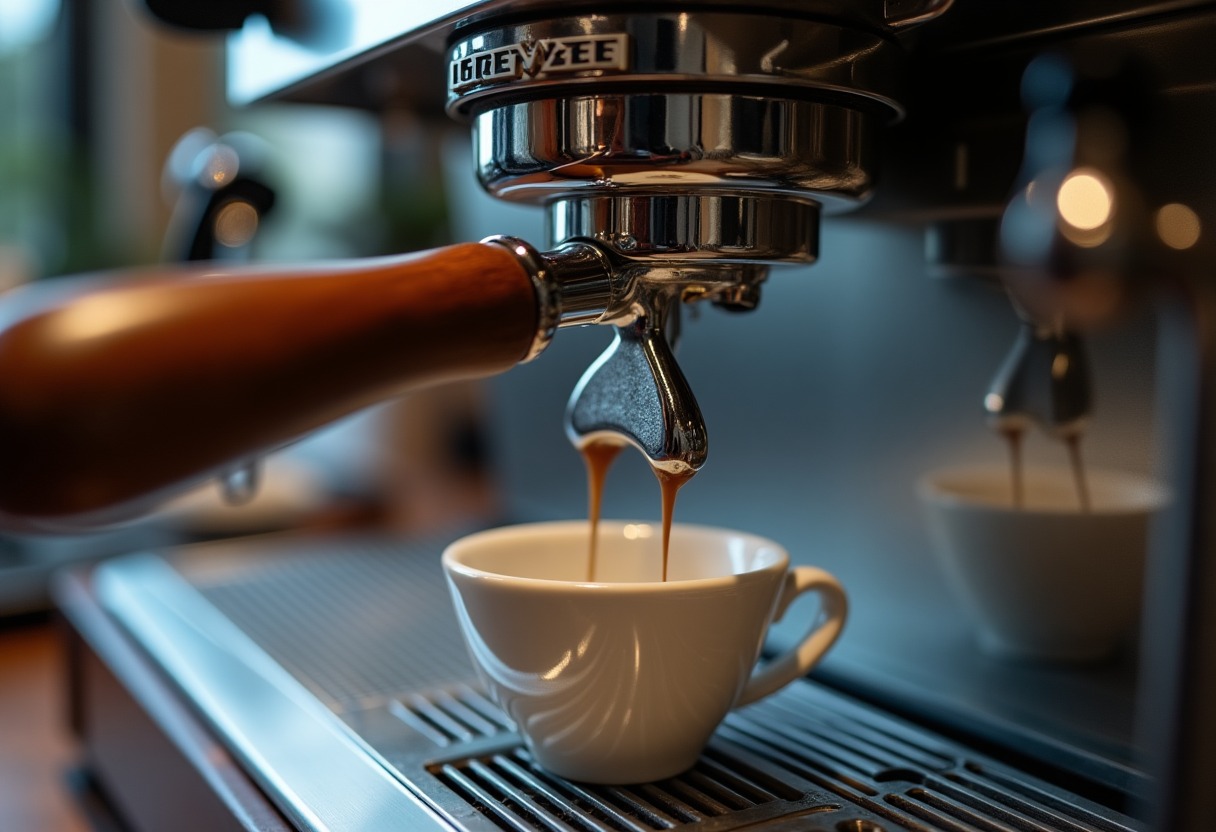
The difference between a sour, bright shot and a balanced extraction often comes down to 3-5°F at the group head. On machines without PID controllers — most single boilers and heat exchanger systems — you need to time your pull within a narrow window between heating cycles. Miss it by 20 seconds and you're either under or over-extracting.
Why Temperature Surfing Matters for Espresso Quality
The Specialty Coffee Association recommends brew temperatures between 195-205°F for espresso, with most modern light roasts extracting optimally at 200-203°F. Non-PID machines swing 10-20°F around their set point as the thermostat cycles on and off. You're chasing a moving target.
Single boiler machines face the steepest challenge. After steaming milk, the boiler sits at 250°F or higher — way too hot for pulling espresso. You need to cool it down to the brew range without waiting 15 minutes. Heat exchanger machines have the opposite problem: water sitting in the group head heat exchanger superheats beyond extraction range, requiring a cooling flush to purge that overheated water before pulling.
Temperature stability directly affects extraction yield and flavor balance. A 10°F variance can shift your extraction by 2-3 percentage points, which is the difference between balanced and astringent. On machines without active temperature management like those covered in our Espresso Machine PID Controller guide, timing becomes your control variable.
Temperature Surfing Technique for Single Boiler Machines
Single boiler temperature surfing requires understanding your specific machine's heating cycle. Most consumer single boilers take 25-40 seconds to heat from brew temp to steam temp when you flip the switch, and 60-90 seconds to cool back down naturally.
The technique: after steaming, flip back to brew mode and run water through the group head. This cools the boiler faster than passive cooling by pulling heat through the system. Watch your ready light. On most machines, the light comes on when the thermostat cuts out around 200°F. This is your window.
Pull immediately after the light comes on for shots around 198-200°F. Wait 10-15 seconds after the light for 200-203°F. Wait longer and the temp climbs as the boiler overshoots. The Gaggia Classic, Rancilio Silvia, and Breville Bambino all follow this pattern with slight timing variations.
If you're starting cold (no steaming), run a blank shot through the group head to preheat everything. This stabilizes the thermal mass. Pull when the ready light has cycled twice — first cycle brings the boiler up, second cycle means the group head is actually at temp. → Shop single boiler espresso machines on Amazon
For visual confirmation, stick a thermometer strip on the boiler housing or use a group head thermometer. Digital strips respond slowly, but they'll show you the pattern after a few cycles. → Shop espresso thermometer strip on Amazon
Heat Exchanger Cooling Flush Protocol
Heat exchanger machines constantly circulate boiler water through a tube inside the steam boiler. That tube gets hotter than brew temp when the machine sits idle. The standard fix is a cooling flush — running water through the group before pulling to purge superheated water and stabilize the heat exchanger.
Flush duration depends on how long the machine has been idle and your boiler pressure. After 5 minutes idle, most E61 group heads need 3-4 ounces of water flushed (4-6 seconds). After 20+ minutes, you might need 6-8 ounces (8-10 seconds). This isn't just guessing — the water temperature drops noticeably mid-flush.
Run the flush into a cup and feel the water temp change. It starts scalding hot, then moderates. Stop when it feels like hot tap water, not steam. Some people use a portafilter thermometer to get exact readings, but after a week you'll recognize the pattern. → Shop portafilter thermometer on Amazon
The alternative technique is a long, slow flush — called surfing on HX machines. Instead of one burst, you crack the brew lever and let a thin stream run for 20-30 seconds. This gently brings the heat exchanger down and stabilizes it without the thermal shock of a heavy flush. ECM, Profitec, and Lelit owners swear by this method.
After your flush, insert the portafilter and pull immediately. Don't wait. The group head starts heating back up the moment you stop flushing. On machines with Espresso Group Head Types like saturated groups, this recovery happens faster because there's more thermal mass staying hot.
Single Boiler vs Heat Exchanger vs Dual Boiler Temperature Control
| Machine Type | Temp Stability | Technique Required | Recovery Time | Best Use Case | |--------------|----------------|-------------------|---------------|---------------| | Single Boiler (no PID) | ±15-20°F | High — must time heating cycle precisely | 60-90 sec after steaming | Solo drinks, straight espresso focus | | Single Boiler (with PID) | ±3-5°F | Minimal — PID maintains set point | 30-45 sec after steaming | Solo drinks with temp precision | | Heat Exchanger | ±8-12°F | Medium — cooling flush required | Instant (steam always ready) | Back-to-back drinks, milk-focused | | Dual Boiler | ±2-3°F | None — independent temp control | Instant (both always ready) | High volume, dialing in roasts |
The comparison shows why temperature surfing exists — it's the skill tax you pay for affordable single boiler and heat exchanger designs. Machines covered in our Best Espresso Machines Home 2026 roundup span all these categories. A dual boiler eliminates surfing entirely but costs 2-3x more. If you're pulling two shots per day, single boiler surfing is manageable. If you're making milk drinks for guests, the HX cooling flush workflow makes more sense.
Understanding Espresso Machine Boiler Types helps you recognize which technique applies to your setup. The thermoblock machines in our Best Espresso Machines Under 500 guide heat so fast that traditional surfing doesn't apply — you're just waiting for the ready light.
Tools and Mods for Better Temperature Surfing
Serious single boiler users install PIDs. A PID controller gives you ±3°F stability instead of ±15°F swings, which effectively eliminates surfing. The mod costs $150-200 in parts and takes an afternoon if you're comfortable with basic wiring. Our Espresso Machine PID Controller guide walks through the process for common machines like the Gaggia Classic Pro and Rancilio Silvia.
For non-modders, a group head thermometer helps you learn your machine's pattern. These screw into the portafilter and show real-time temp at the point of contact. After two weeks of logging temps and timing, you'll internalize the windows. → Shop group head thermometer on Amazon
Some HX machines offer adjustable thermostats or flow restrictors that change how aggressively the heat exchanger heats. Lowering the boiler pressure from 1.2 bar to 1.0 bar drops group temperature by 4-6°F and reduces the cooling flush needed. Check your manual before adjusting — not all machines expose these controls.
The low-tech approach: keep detailed notes for one week. Log every shot with time since last pull, flush duration, and taste result. You'll spot patterns specific to your machine, your beans, and your routine. Pair this with the dialing-in process from How To Dial In Espresso and you'll build an intuitive sense of when to pull.
→ Shop heat exchanger espresso machines on Amazon
Advanced Surfing: Matching Temperature to Bean Roast Level
Light roasts need higher temps to unlock their complex acidity — aim for 202-204°F. Dark roasts extract faster and taste bitter above 198°F. Temperature surfing lets you adjust without a PID by timing your pull differently within the heating cycle.
For light roasts on a single boiler, pull at the peak of the cycle — right when the element cuts out or even 5-10 seconds after the ready light. The residual heat keeps temps high. For darker roasts, pull as soon as the light comes on, catching the lower end of the range.
On HX machines, adjust your cooling flush. Lighter roasts get a shorter flush (less cooling). Darker roasts get a longer flush or the slow-drip technique to bring temps down further. This is how cafes running E61 machines manage different beans without adjusting the boiler — they change the flush protocol.
This granular control matters when you're working with high-end beans from Best Coffee Subscriptions 2026 where $20/bag coffee deserves precise extraction. Combined with proper Espresso Puck Preparation and grind consistency from a quality grinder in our Best Coffee Grinders Espresso guide, temperature surfing becomes another lever for dialing in exceptional shots.
The relationship between temperature and Espresso Extraction Yield Target Range is nonlinear. A 3°F change at 195°F affects extraction less than the same 3°F change at 203°F. This means your timing window gets tighter at higher temperatures — there's less room for error when chasing bright, fruity notes from Ethiopian naturals.
FAQ
How long should I wait between steaming milk and pulling espresso on a single boiler? After steaming, immediately flip to brew mode and run water through the group head for 3-4 seconds to start cooling the boiler. Wait for the ready light to cycle on (usually 45-75 seconds total), then pull immediately. This brings you from steam temp (~250°F) down to brew range (~200°F) in under two minutes instead of waiting 10+ minutes for passive cooling.
What temperature should I target for medium roast espresso? Medium roasts extract well between 199-202°F measured at the group head. This balances sweetness and acidity without the bitterness that develops above 203°F or the sourness below 197°F. Start at 200°F and adjust based on taste — move up if the shot tastes sour or thin, down if it's bitter or harsh.
Do I need to cooling flush an HX machine every time? Yes, if the machine has been idle for more than 3-5 minutes. The heat exchanger continues heating from the steam boiler when you're not pulling shots, superheating the water inside. A 4-6 second flush after short idle periods and 8-10 seconds after 20+ minutes ensures you're starting with water in the correct temperature range rather than 210°F+ water that over-extracts immediately.
Can I temperature surf on a machine with a PID? PID-equipped machines maintain their set temperature within ±3°F, so traditional surfing isn't necessary. However, you can still manually adjust your PID set point up or down by 2-4°F for different roast levels, which is a more controlled version of surfing. This is especially useful when switching between light and dark roasts throughout the day.
How do I know if my temperature surfing timing is working? Track taste results systematically for a week. If shots are consistently sour, you're pulling too early or flushing too long (under-temp). If they're consistently bitter or harsh, you're pulling too late or not flushing enough (over-temp). When you hit balanced extractions with clear sweetness and distinct flavor notes — and can repeat it three days in a row — you've dialed in your timing.
The Bottom Line
Temperature surfing turns an equipment limitation into a learnable skill — one that pays off in cup quality every single morning.
Some links on this page are affiliate links. We may earn a small commission if you purchase through them, at no extra cost to you.
As an Amazon Associate we earn from qualifying purchases. This article contains affiliate links; if you buy through them we may earn a small commission at no additional cost to you.