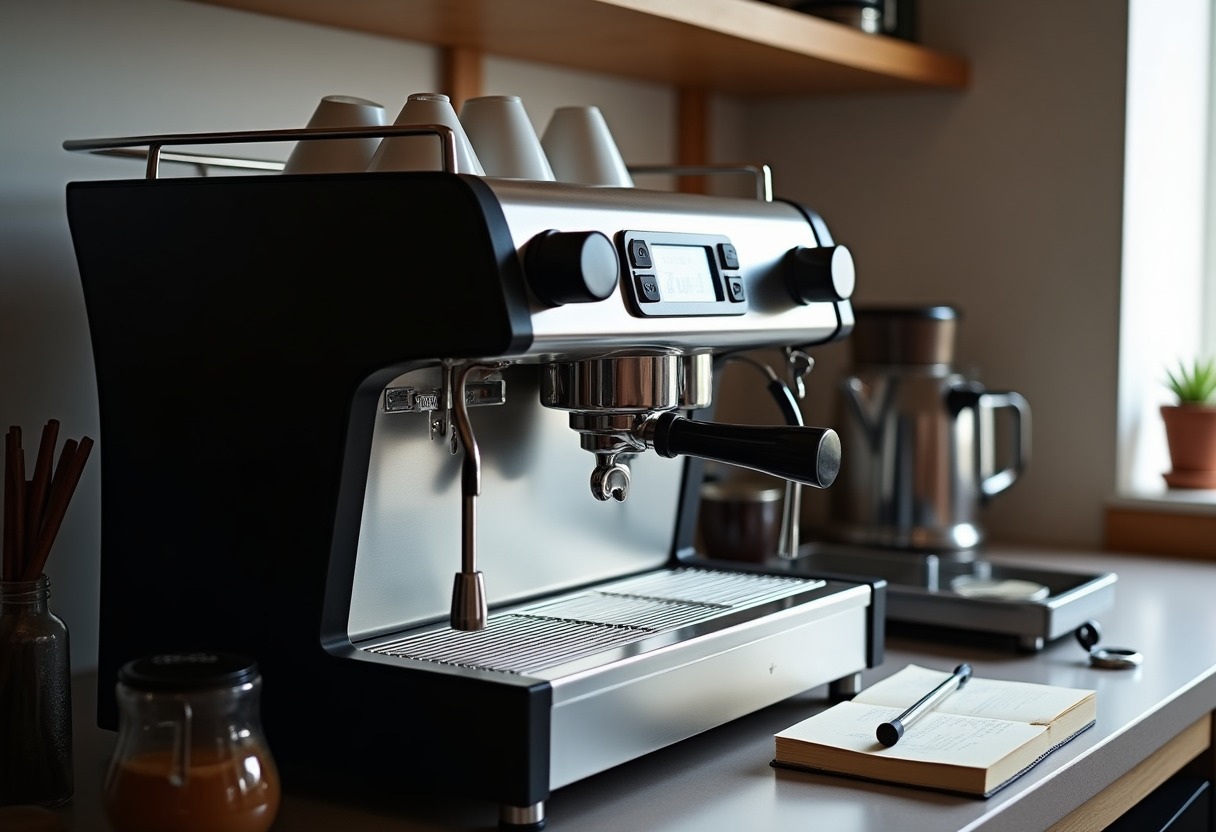
Temperature swings of just 2°F can shift your espresso from balanced to sour or bitter. Basic thermostats create temperature oscillations of ±5-8°F, while PID controllers maintain stability within ±0.5°F — the difference between guessing and precision.
Why Thermal Stability Defines Espresso Quality
Water temperature drives solubility in coffee extraction. At 202°F, you'll extract roughly 18-22% of the coffee's soluble compounds. Drop to 190°F, and extraction efficiency plummets to 15-16%, leaving you with sour, underdeveloped shots. Push to 210°F, and you'll over-extract bitter compounds while cooking delicate aromatics.
The Specialty Coffee Association specifies brewing temperatures between 195-205°F for optimal extraction. Most home machines target 200-202°F, but maintaining that temperature throughout a 25-30 second extraction requires precise thermal management.
Basic thermostat systems work like your home heating — they heat until reaching the target temperature, shut off, then reheat when temperature drops. This creates constant temperature swings that directly impact extraction consistency. One shot pulls at 198°F, the next at 204°F, creating unpredictable flavor variations that make dialing in espresso nearly impossible.
How PID Controllers Transform Espresso Brewing
PID stands for Proportional-Integral-Derivative control — a feedback system that continuously adjusts heating power based on real-time temperature readings. Instead of simple on/off heating, PIDs modulate power output to prevent temperature overshoot and maintain steady temperatures.
The proportional component responds to current temperature differences. If you're 2°F below target, it applies proportional heating power. The integral component addresses persistent temperature errors over time. The derivative component anticipates temperature changes based on the rate of change, preventing overshoot before it occurs.
This tri-component approach maintains espresso machine PID controller accuracy within ±0.5°F during brewing, compared to ±5-8°F with basic thermostats. The difference transforms shot consistency — you can adjust grind size and dose without temperature variables confusing your results.
→ Shop PID espresso machines on Amazon
PID vs Thermostat: Real-World Performance Comparison
| Control System | Temperature Stability | Recovery Time | Shot Consistency | Price Premium | |---|---|---|---|---| | Basic Thermostat | ±5-8°F | 45-90 seconds | Poor | $0 | | PID Controller | ±0.5°F | 15-30 seconds | Excellent | $200-500 | | Dual Boiler + PID | ±0.3°F | Instant | Professional | $800-1500 | | Pressure Profiling + PID | ±0.2°F | Instant | Competition Level | $2000+ |
Temperature recovery time matters when pulling multiple shots. Basic thermostats need 45-90 seconds to restabilize after each extraction. PIDs recover within 15-30 seconds because they anticipate and compensate for thermal losses during brewing.
Shot consistency improves dramatically with PID control. Temperature variables no longer interfere with your grinding and dosing adjustments. When your shots taste off, you know it's technique or bean-related, not random temperature fluctuations.
The price premium for PID control ranges from $200-500 on single boiler machines, but the investment pays dividends in consistency and learning speed. You'll dial in new beans faster and maintain shot quality across extended brewing sessions.
Machine Categories and Thermal Management Systems
Entry-level machines under $500 typically use basic thermostats with aluminum boilers. These systems work for occasional use but struggle with temperature stability and recovery time. The Best Espresso Machines Under 500 guide covers thermostat-controlled options that maximize performance within budget constraints.
Mid-range machines ($500-1500) increasingly feature PID controllers with brass or stainless steel boilers. Single boiler PID systems like the Gaggia Classic Pro with PID upgrade offer dramatic improvements over basic thermostats while maintaining simplicity.
→ Shop dual boiler espresso machines on Amazon
High-end machines ($1500+) combine PID control with dual boiler systems. Separate boilers for brewing and steam eliminate temperature compromise — your espresso extracts at 201°F while steam stays at 250°F+. This setup appears in our Best Espresso Machines Home 2026 recommendations for serious home baristas.
Professional-grade machines add pressure profiling to PID thermal management. Systems like the Decent DE1+ combine temperature stability with programmable pressure curves, allowing extraction optimization that goes beyond basic PID control.
Advanced PID Tuning for Perfect Extraction
Most PID espresso machines arrive with conservative factory settings that prioritize stability over performance. Fine-tuning PID parameters unlocks better temperature control and faster recovery times.
The proportional (P) value controls how aggressively the system responds to temperature differences. Higher P values provide faster response but risk temperature overshoot. Start with factory settings and increase gradually if recovery times seem slow.
Integral (I) values address persistent temperature errors. If your machine consistently runs 1°F low despite accurate calibration, increasing the I value compensates over time. Too high, and you'll create temperature oscillations.
Derivative (D) values prevent overshoot by anticipating temperature changes. Increase D if your machine overshoots target temperature during heating cycles. Decrease if temperature response becomes sluggish.
→ Shop espresso machine thermometer on Amazon
Temperature surfing becomes unnecessary with properly tuned PIDs. Instead of timing your shots based on heating cycles, you can focus on grind quality and distribution. This consistency accelerates learning and improves shot repeatability.
Monitor actual brew water temperature using group head thermometers or temperature strips during PID tuning. Display temperatures often differ from actual brewing temperatures by 2-5°F depending on sensor placement and thermal lag.
FAQ
What's the practical difference between ±0.5°F and ±5°F temperature stability for home espresso? Temperature variations of ±5°F create noticeable flavor changes in espresso shots. A 5°F drop reduces extraction efficiency enough to produce sour, underdeveloped shots, while a 5°F increase over-extracts bitter compounds. With ±0.5°F stability from PID controllers, temperature becomes a controlled variable rather than a source of inconsistency. You can adjust grind size, dose, and timing without temperature fluctuations masking your adjustments or creating random flavor variations between shots.
Can I retrofit a PID controller to my existing thermostat espresso machine? Many popular machines accept PID retrofits, particularly the Gaggia Classic series, Rancilio Silvia, and Breville Barista Express models. Retrofit kits typically cost $150-300 and require basic electrical work — connecting temperature sensors and replacing the existing thermostat control board. The modification usually voids warranties but transforms machine performance. Some technical skill is required for installation, including opening the machine chassis and working with 120V electrical connections. Professional installation adds $100-200 to the total cost.
How do dual boiler systems with PID compare to single boiler PID machines? Dual boiler PID systems eliminate temperature compromise between brewing and steaming functions. Single boiler machines require temperature adjustment between brewing (200°F) and steaming (250°F), creating 2-3 minute wait times between functions. Dual boilers maintain optimal temperatures simultaneously, allowing immediate transitions from espresso to milk steaming. The thermal stability remains excellent with both systems — ±0.5°F for quality single boilers, ±0.3°F for dual boilers — but workflow efficiency improves dramatically with dual boiler designs.
Does water temperature stability matter as much with light roast versus dark roast coffee? Light roast coffee requires more precise temperature control than dark roasts because the bean structure retains more density and complexity. Light roasts need consistent 202-204°F temperatures to extract properly without sourness, while dark roasts extract adequately across 195-202°F ranges. Temperature fluctuations affect light roast extraction more severely — a 3°F drop can shift a balanced light roast shot to undrinkably sour. Dark roasts show more forgiveness with temperature variations, but PID stability still improves shot consistency and reduces the need for constant brewing parameter adjustments.
What temperature should I set my PID controller for optimal espresso extraction? Most espresso benefits from 200-202°F brewing temperature, but optimal settings depend on roast level, bean origin, and grind quality. Light roasts typically perform best at 202-204°F to extract fruit and acidity properly. Medium roasts extract well at 200-202°F for balanced sweetness and complexity. Dark roasts work at 195-200°F to avoid over-extracting bitter compounds. Start at 201°F and adjust in 1°F increments based on taste — increase temperature if shots taste sour or thin, decrease if shots taste bitter or harsh. Quality grinder performance affects optimal temperature more than roast level alone.
PID controllers transform espresso machines from temperature-guessing appliances into precision brewing instruments that respond predictably to your technique adjustments.
Some links on this page are affiliate links. We may earn a small commission if you purchase through them, at no extra cost to you.
As an Amazon Associate we earn from qualifying purchases. This article contains affiliate links; if you buy through them we may earn a small commission at no additional cost to you.