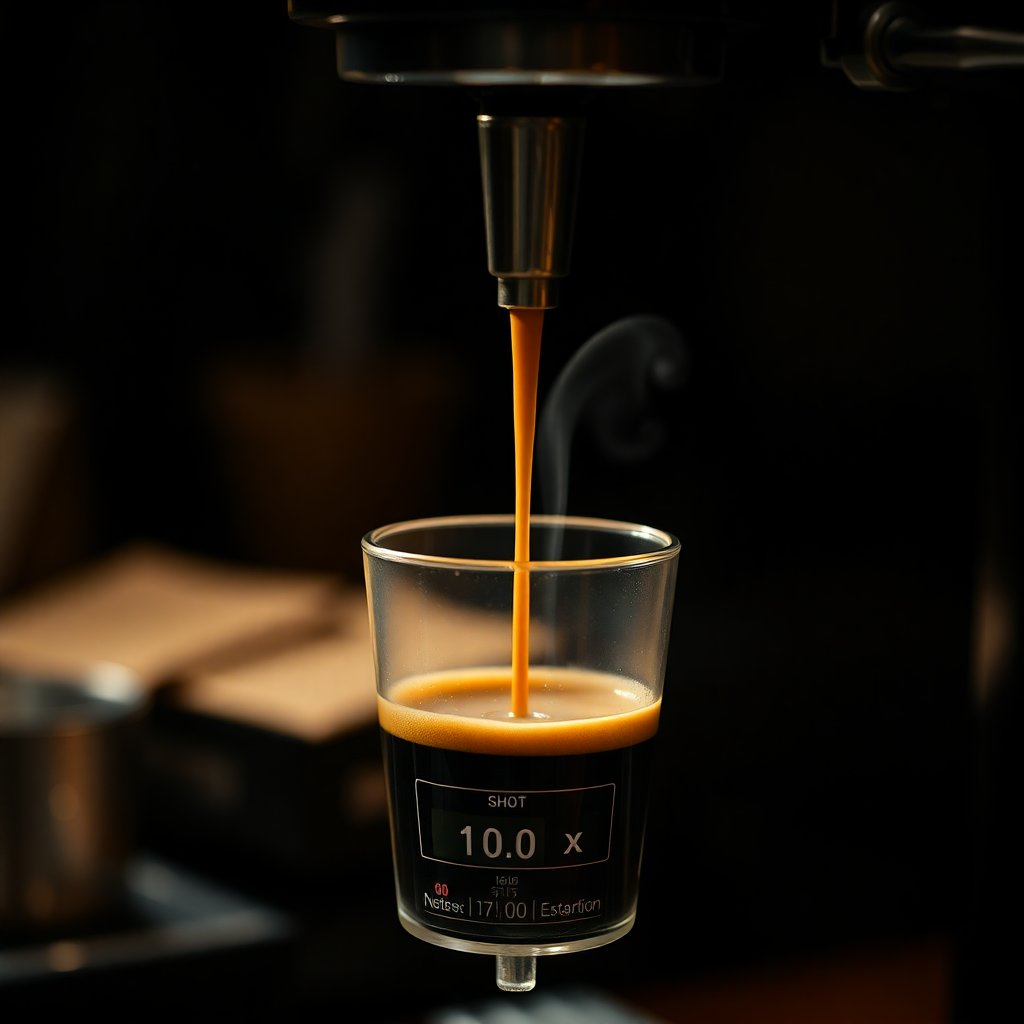
How to Dial In Espresso: A Beginner's Guide to Actually Good Shots
"Dial in" sounds intimidating. It's not — once you understand what you're actually controlling.
Every espresso shot is the product of three variables: dose (how much coffee goes in), yield (how much liquid comes out), and time (how long the shot takes to pull). Get those three variables into the right relationship and you have good espresso. Mess them up and you have something that tastes sour or bitter or just... flat.
This guide explains each variable, how they interact, and how to adjust them when your shots go wrong.
The Golden Ratio
The starting point for any dial-in is the espresso ratio — the relationship between dry coffee in and liquid espresso out.
The standard starting ratio is 1:2 — 18 grams of coffee in, 36 grams of espresso out.
That 36g of liquid should take 25-30 seconds from the moment the pump starts.
This is your benchmark. A 1:2 ratio in 27 seconds is not a magic formula — it's a starting point. Adjust from there based on taste.
Why Ratio Matters
The ratio controls concentration and flavor intensity. A 1:1.5 ratio (18g in, 27g out) produces a more concentrated, often sweeter shot — a ristretto style. A 1:3 ratio (18g in, 54g out) produces a lighter, longer shot — a lungo style.
Different coffees, different roast levels, and different personal preferences all call for different ratios. Learning to adjust ratio is the key to pulling great shots from any coffee.
The Three Variables
1. Dose (Coffee In)
Dose is the amount of dry ground coffee you put in the portafilter basket.
Most 58mm double baskets are designed for 18-20g. Most 54mm (Breville-style) baskets are designed for 16-18g. Start at the basket's rated dose.
Don't change dose to fix extraction problems. Dose sets the base. Change grind size first.
2. Yield (Liquid Out)
Yield is the weight of liquid espresso that comes out of the portafilter. Weigh it — don't eyeball.
You need a scale under your cup. A 0.1g precision scale is ideal but 1g resolution works fine for most.
Check espresso scales on Amazon
Start at 2x your dose weight. Adjust based on taste: increase yield for lighter, less intense espresso; decrease for stronger, more concentrated shots.
3. Time (Shot Duration)
Time is the duration of the shot — typically measured from when pump starts until you stop the pull.
Target: 25-30 seconds for a 1:2 ratio.
Time is the variable that tells you if your grind is right:
- Shot runs too fast (under 20s): Grind is too coarse. Water flows through too easily. Shots will be sour.
- Shot runs too slow (over 35s): Grind is too fine. Water struggles to flow through. Shots will be bitter/over-extracted.
How to Adjust Grind Size
Grind size is the primary adjustment tool for espresso. When your shots are wrong, this is almost always what you change.
A quality grinder makes this much easier — coarse adjustments with a cheap grinder can swing shot time by 15+ seconds.
Shot too fast (sour, thin, weak): Grind finer. Make one small adjustment at a time. Purge a small amount of coffee to clear the old grind from the burrs.
Shot too slow (bitter, harsh, dry): Grind coarser. Same process.
Shot in range but tastes off: Adjust ratio next. More yield = lighter; less yield = stronger.
The 1-Adjustment Rule
Change one variable at a time. If you change dose, grind, and ratio simultaneously, you won't know which change fixed (or broke) the shot.
Reading the Shot
A well-pulled shot has:
- Crema: Golden-brown, tiger-striped foam. Thicker doesn't mean better — dry espresso produces thick crema that tastes bad.
- Blonding: The shot starts dark reddish-brown and lightens ("blondes") toward the end. Stop the shot when it blondes significantly — that's the over-extracted tail.
- Taste: Should be complex, balanced, with sweetness underlying any bitterness. A sip of espresso should be enjoyable on its own.
Diagnosing by Taste
Sour: Under-extracted. Shot ran too fast, or dose too high, or yield too low. Grind finer first.
Bitter: Over-extracted. Shot ran too slow, or yield too high. Grind coarser first.
Flat/hollow: Often stale coffee. Check your beans — roast date matters. Buy fresh, ideally roasted within 2-3 weeks.
Astringent/dry: Channeling (water found a path of least resistance through the puck). Check your distribution and tamping. A WDT tool helps significantly.
WDT distribution tool on Amazon
The Dial-In Workflow
- Start with manufacturer's dose recommendations for your basket
- Target 1:2 ratio (18g in → 36g out)
- Pull shot; time it
- If too fast: grind finer. If too slow: grind coarser
- Once time is in range (25-30s), taste
- Adjust ratio if needed (more yield = lighter; less = stronger)
- Repeat until happy
Most coffees dial in within 3-5 shots. A new bag of coffee may need a fresh dial-in — roast level and freshness both affect how a coffee extracts.
Tools That Help
Scale: Non-negotiable. You cannot dial in consistently without weighing dose and yield.
Timer: Your scale may have one built in. If not, the shot timer on your phone works.
WDT tool: Distributes grounds evenly in the basket before tamping. Dramatically reduces channeling.
Decent tamper: Flat base, correct diameter (58mm for most machines). Don't use the plastic one that came in the box.
The investment in these tools pays back immediately in shot consistency. Espresso is a precision craft. The tools exist to make precision achievable.
Frequently Asked Questions
What does "dialing in" espresso mean?
Dialing in refers to the process of adjusting your grind size (and sometimes dose) until your espresso extracts in the target time window — typically 25–35 seconds for a 1:2 ratio (18g in, 36g out). A shot that runs too fast (under 20 seconds) is under-extracted and tastes sour; too slow (over 40 seconds) is over-extracted and tastes bitter. Dialing in finds the sweet spot for your specific beans, machine, and grinder combination.
How do I fix sour espresso?
Sour espresso is under-extracted — the water moved through the grounds too quickly. Fix it by grinding finer (smaller particle size slows the water flow and increases extraction time). Alternatively, increase your dose slightly or lower your brew temperature. Taste the shot at the 25-second mark — if it's sour and weak with little crema, finer grind is the first adjustment to make.
How do I fix bitter espresso?
Bitter espresso is over-extracted — too much extraction. Fix it by grinding coarser to allow faster flow and less extraction time. Also check your brew temperature (too hot increases bitterness) and your dose (too little coffee in the basket over-extracts faster). If your shot is running well over 35 seconds, grinding coarser is the first fix.
How long should an espresso shot take to pull?
A standard espresso shot (18g coffee in, 36g out — a 1:2 brew ratio) should extract in approximately 25–35 seconds from when you start your pump. This timing target was established with traditional Italian espresso machines at 9 bars of pressure. Some modern recipes use different ratios, but 25–35 seconds is the reliable starting point for dialing in most machines and beans.
Why does my espresso taste different every day with the same settings?
Bean freshness, ambient temperature, and humidity all affect grind size requirements. Freshly roasted beans (3–7 days off roast) are much more CO2-active and often need a coarser grind than older beans. Cold weather can require finer grinds. Aging beans go stale and require finer grinding to compensate. If your shot times are drifting without changing settings, these environmental and freshness factors are the likely cause.
As an Amazon Associate we earn from qualifying purchases. This article contains affiliate links; if you buy through them we may earn a small commission at no additional cost to you.