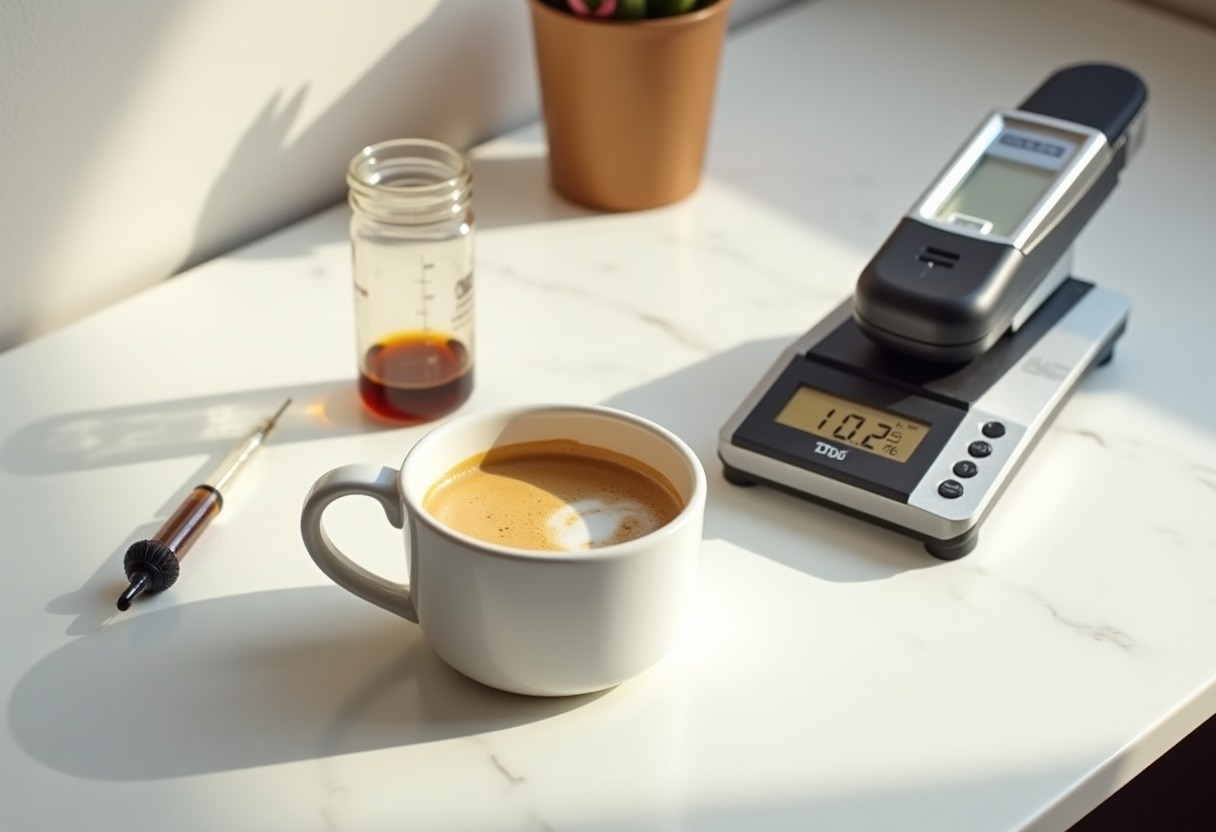
Your espresso tastes flat at 16% extraction and bitter at 25%, but you've never measured either number. That gap between guessing and knowing costs you great shots every morning, because espresso extraction yield—the percentage of coffee solids dissolved into your cup—determines whether your expensive beans deliver their best flavors or disappoint with harsh acids and bitter compounds.
Why Espresso Extraction Yield Controls Your Shot Quality
Extraction yield measures how much of your ground coffee dissolves into the final espresso. When you brew 18 grams of coffee and extract 2.5 grams of soluble compounds, you've achieved roughly 14% extraction—well below the optimal range. The Specialty Coffee Association identifies 18-22% as the sweet spot where desirable compounds extract without excessive bitterness.
This range exists because coffee compounds extract in a predictable sequence. Acids and sugars dissolve first, followed by more complex aromatics, then bitter compounds and astringents. Below 18%, you taste sour acidity without balancing sweetness. Above 22%, bitter compounds overwhelm the cup. Within the 18-22% window, you capture coffee's full flavor spectrum in proper proportion.
Professional baristas measure extraction yield routinely, but home enthusiasts often skip this step despite owning machines capable of remarkable precision. Without measurement, you're adjusting variables blindly, hoping grind size changes will fix problems you can't quantify. A → Shop coffee refractometer on Amazon removes the guesswork entirely.
Understanding Total Dissolved Solids and Yield Calculations
Total Dissolved Solids (TDS) measures the concentration of coffee compounds in your finished espresso, typically ranging from 8-12% for well-extracted shots. TDS alone doesn't tell the complete story—a 10% TDS shot could represent perfect extraction at 20% yield or over-extraction at 25% yield, depending on your brew ratio.
Extraction yield calculation requires three measurements: dose weight, beverage weight, and TDS percentage. The formula is straightforward: (Beverage Weight × TDS) ÷ Dose Weight × 100 = Extraction Yield %. An 18-gram dose producing 36 grams of espresso at 10% TDS yields exactly 20% extraction—ideal territory.
Most home baristas skip TDS measurement because refractometers seem intimidating or expensive. A → Shop TDS meter coffee on Amazon provides a reasonable starting point, though serious enthusiasts benefit from a proper refractometer designed for coffee. The measurement process takes thirty seconds: cool your sample to room temperature, place a drop on the refractometer, and read the digital display.
Temperature affects TDS readings significantly. Hot espresso measures 15-20% lower than the same sample at room temperature, so always cool samples before measuring. Professional labs use specific cooling protocols, but letting your sample sit for two minutes provides adequate accuracy for home use. This small step prevents the most common measurement error among new users.
Dialing In Your Grinder and Machine for Target Yield
Achieving consistent 18-22% extraction requires systematic adjustment of grind size, dose, and timing. Grind size affects extraction speed most dramatically—finer grinds increase extraction yield by exposing more surface area to water, while coarser grinds reduce it. Start with your current grind setting and measure baseline extraction before making changes.
Your Best Coffee Grinders Espresso choice affects extraction consistency more than any other variable. Blade grinders produce uneven particles that extract unpredictably, while quality burr grinders deliver the uniformity needed for repeatable results. Conical burrs excel at consistent particle distribution across the usable range, though flat burrs often provide slightly better clarity in the final cup.
Dose consistency matters equally. A 0.1-gram variation in dose creates roughly 0.3% extraction difference—small individually but significant when compounded across multiple variables. A → Shop espresso brewing scale on Amazon with 0.1-gram precision eliminates this variable entirely. Many baristas dose by volume or feel, but weight remains the only reliable method.
Pre-infusion and pressure profiling affect extraction yield subtly but measurably. Gentle pre-infusion at 2-3 bars for 5-8 seconds allows water to penetrate grounds evenly before full extraction begins. Machines with pressure profiling capabilities can reduce brewing pressure toward the end of the shot, preventing over-extraction of bitter compounds while maintaining overall yield.
Extraction Yield by Brewing Method Comparison
| Brewing Method | Target Yield Range | Typical TDS | Key Variables | |----------------|-------------------|-------------|---------------| | Traditional Espresso | 18-22% | 8-12% | Grind size, pressure, timing | | Lungo Style | 15-18% | 6-9% | Extended extraction time | | Ristretto Style | 20-25% | 12-15% | Fine grind, short extraction | | Turbo Shots | 22-26% | 10-13% | Very fine grind, fast flow |
Traditional espresso achieves balanced extraction through moderate pressure and timing, making it the most forgiving approach for consistent results. Lungo-style shots extract lower yields but offer different flavor profiles, emphasizing brightness and acidity. Ristretto concentrates extraction into a smaller volume, requiring precise grind adjustment to avoid harsh over-extraction.
Turbo shots represent a modern approach using very fine grinds and fast flow rates to achieve high extraction yields without excessive bitterness. This technique demands exceptional grind consistency and precise timing, making it suitable for experienced home baristas with quality equipment. The payoff includes intense flavor concentration and efficiency—perfect shots in 20-25 seconds rather than traditional 25-30 second extractions.
Essential Tools for Measuring Extraction Yield
Accurate extraction yield measurement requires specific tools beyond your espresso machine and grinder. A quality refractometer designed for coffee provides the most precise TDS readings, while general-purpose models often lack the calibration needed for coffee's specific refractive properties. Coffee-specific refractometers account for compounds unique to coffee extraction.
Digital scales with 0.1-gram precision serve double duty for dosing and measuring output weight. Many espresso enthusiasts own accurate scales already, but models with fast response times and stable readings work best for shot timing. Built-in timers help track extraction duration while maintaining focus on other variables during brewing.
Sample syringes allow precise measurement of small espresso volumes for TDS testing. Standard droppers work adequately, but → Shop coffee syringe extraction on Amazon provides better accuracy for consistent sample sizes. Professional baristas often use 1ml syringes for repeatable measurements.
Smartphone apps and → Shop extraction yield calculator on Amazon simplify the math involved in yield calculations. Several apps designed specifically for coffee professionals include features like brewing ratio recommendations and extraction target adjustments based on taste preferences. These tools eliminate calculation errors and speed up the dialing process significantly.
Advanced Extraction Techniques Most Guides Skip
Water temperature profiling affects extraction yield in ways most home baristas never explore. Starting extraction at 200°F and dropping to 195°F during the shot can increase overall yield while reducing bitter compound extraction. Machines with programmable temperature control make this technique accessible, though it requires careful experimentation to perfect.
Bean age dramatically affects optimal extraction parameters. Freshly roasted beans (2-7 days) often require slightly coarser grinds to achieve target yields, while older beans (14-21 days) extract more predictably at finer settings. Understanding this relationship prevents the common mistake of constantly adjusting grind size when time would solve the problem naturally.
Basket geometry influences extraction evenness and final yield more than most baristas realize. Standard baskets concentrate flow through the center, while precision baskets distribute water more evenly across the coffee bed. VST and IMS baskets often require grind adjustments compared to stock equipment, but they deliver noticeably more consistent extraction yields.
Distribution and tamping technique affects yield by ensuring even water contact with grounds. Poor distribution creates channels where water flows preferentially, reducing overall extraction despite potentially high flow rates. The 2026 03 28 Best Espresso Tampers guide covers specific techniques for achieving even compression across your entire coffee bed.
Grinding immediately before brewing maximizes extraction potential by preserving aromatics and preventing oxidation. Pre-ground coffee loses extraction efficiency within hours, requiring finer grinds to achieve the same yields as fresh-ground beans. This relationship explains why single-dosing grinders have become popular among serious home baristas.
FAQ
How do I know if my 19% extraction yield espresso tastes good even though it's in the target range? Extraction yield provides a baseline for consistent brewing, but personal taste preferences vary significantly within the 18-22% range. A properly extracted 19% shot should taste balanced without excessive sourness or bitterness, but you might prefer the brightness of 18% extraction or the body of 21% extraction. Use yield measurements as a starting point for consistent brewing, then fine-tune based on your palate preferences. The key advantage of measuring yield is eliminating variables so you can make intentional taste adjustments rather than random changes.
Can I achieve target extraction yields with a budget espresso machine under $500? Yes, but with limitations. Budget machines often lack pressure profiling and precise temperature control, but proper grind size, dose consistency, and timing can still achieve 18-22% extraction yields. Your Best Espresso Machines Under 500 selection matters less than grinder quality for extraction consistency. Focus investment on a capable burr grinder first, then upgrade your machine as budget allows. Manual lever machines in this price range often provide better extraction control than automatic alternatives.
Why does my extraction yield vary by 2-3% between identical shots? Extraction yield variation typically stems from inconsistent dosing, uneven tamping, or grinder retention issues. Single-dose grinders minimize retention problems that cause dose variations between shots. Temperature fluctuations in machines without PID controllers also affect extraction efficiency shot-to-shot. Environmental factors like humidity affect grind particle size distribution, requiring minor adjustments for consistency. Measuring and controlling each variable systematically will reduce variation to less than 1% between identical shots.
Should I adjust grind size or dose weight to increase extraction yield from 17% to 20%? Grind size adjustment provides the most direct path to higher extraction yields—finer grinds expose more surface area for extraction. Increasing dose weight while maintaining the same output volume will actually decrease extraction percentage because you're extracting from more coffee grounds into the same liquid volume. Start with small grind adjustments (1-2 clicks on most grinders) and measure results before making additional changes. If grind adjustments create timing issues, then consider dose modifications as a secondary variable.
How does coffee bean origin affect optimal extraction yield ranges? Different coffee origins have varying soluble compound compositions that affect ideal extraction ranges within the 18-22% window. Ethiopian coffees often taste best at 19-20% extraction to preserve delicate florals without excessive extraction of fruit acids. Brazilian coffees typically handle 21-22% extraction well due to lower acidity and higher sugar content. Central American coffees usually perform optimally around 20-21% extraction. These are general guidelines—individual roast profiles and processing methods create more variation than origin alone, so always adjust based on actual taste results rather than origin assumptions.
Measuring espresso extraction yield transforms guessing into precision, turning every morning shot into a repeatable success rather than a hopeful experiment.
Some links on this page are affiliate links. We may earn a small commission if you purchase through them, at no extra cost to you.
As an Amazon Associate we earn from qualifying purchases. This article contains affiliate links; if you buy through them we may earn a small commission at no additional cost to you.