Your espresso tastes progressively worse over weeks despite identical grind settings and technique. Coffee oils oxidize in your group head at 200°F, turning rancid within days and contaminating every shot. Backflushing removes this buildup, but most home baristas either overclean (wasting detergent and wearing seals) or underclean (drinking rancid oil residue).
Why Backflushing Chemistry Matters More Than Frequency
Backflushing forces pressurized water backward through the three-way solenoid valve, clearing accumulated coffee oils from the group head, dispersion screen, and shower screen. Standard brewing can't reach these areas — gravity drains water forward through the puck, never reversing flow to clean upstream components.
Coffee oils contain lipids and proteins that polymerize at brewing temperature. Within 48 hours, these compounds oxidize into sticky, bitter films. A 2019 study published in the Journal of Food Science found that coffee oil oxidation accelerates dramatically above 160°F, producing off-flavors detectable at concentrations as low as 2-3% of total brew volume. Your group head temperature sits at 200°F constantly.
Alkaline detergents (pH 10-11) saponify coffee oils into water-soluble compounds. Acids can't emulsify lipids — they'll strip mineral scale but leave oils intact. This is why descaling solutions and backflush detergents serve completely separate functions. Descaling removes calcium carbonate from boilers and lines. Backflushing removes organic residue from the group head.
The three-way valve opens during backflushing to divert pressure into the drip tray instead of the puck. Machines without three-way valves (most entry-level units) can't backflush properly because pressure has nowhere to escape. If you own a machine under $800, check your manual — many beginner espresso machines lack this valve entirely.
Backflush Frequency Based on Shot Volume
Your cleaning schedule depends on extracted volume, not elapsed days. Twenty shots generate identical residue whether pulled over three days or three weeks.
Recommended backflush schedule:
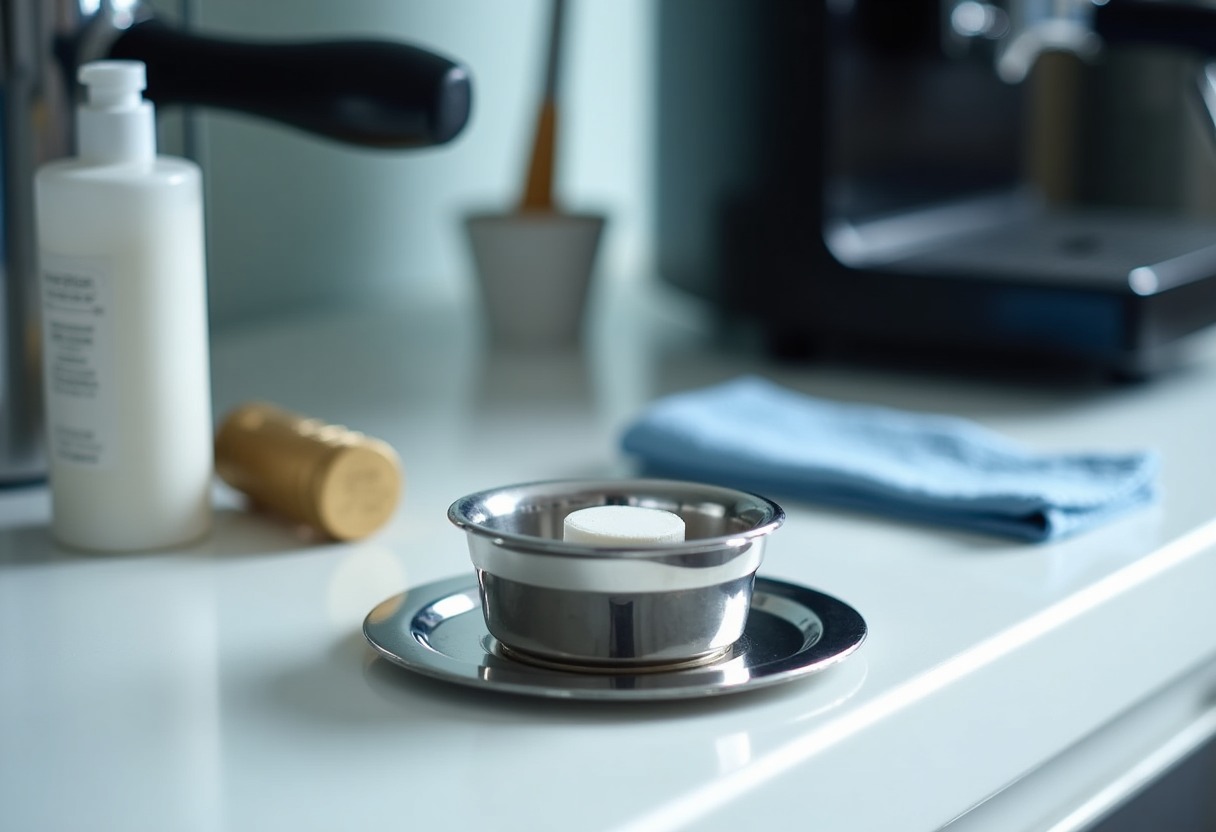
- Every 200 shots: Full detergent backflush with → Shop espresso machine cleaning tablets on Amazon
- Every 50 shots: Water-only backflush (no detergent)
- Daily: Wipe dispersion screen and group gasket with damp cloth
For typical home use (2-4 shots daily), this translates to detergent backflushing every 5-7 weeks. Commercial environments hitting 200 shots need daily detergent cycles. The Specialty Coffee Association recommends this protocol across all machine types from single-boiler to dual-boiler systems.
Water-only backflushing between detergent cycles prevents oil accumulation without the chemical exposure. Run 5-6 blank shots through your → Shop blind portafilter basket on Amazon every 50 extractions. Takes 90 seconds, extends gasket life, and keeps group head clear.
Track shot count with a tally counter or notebook. Your espresso machine's PID display doesn't log extraction history unless you own a GS3 or similar commercial unit. Most home machines lack shot counters entirely.
Detergent Chemistry: Sodium Metasilicate vs. Sodium Percarbonate
Not all backflush detergents perform identically. Active ingredient chemistry determines cleaning power, seal compatibility, and rinse requirements.
| Detergent Type | Active Ingredient | pH | Rinse Cycles Needed | Seal Compatibility | |-------------------|---------------------|--------|----------------------|---------------------| | Cafiza | Sodium metasilicate | 11.2 | 3-4 | Safe for EPDM, damages Viton long-term | | Puly Caff | Sodium percarbonate | 10.8 | 4-5 | Universal seal safe | | Joe Glo | Sodium metasilicate | 11.0 | 3 | EPDM safe, test Viton | | Descaler (for comparison) | Citric acid | 2.5 | N/A (not for backflush) | Dissolves copper, attacks aluminum |
Sodium metasilicate works faster but leaves alkaline residue if under-rinsed. One incomplete rinse contaminates your next five shots with bitter, soapy flavors. Sodium percarbonate breaks down into oxygen and soda ash — gentler on seals, requires more rinse cycles, but impossible to taste if you miss a flush.
Check your group gasket material before choosing detergent. EPDM rubber (black, common in heat exchanger machines) tolerates both chemistries. Viton (brown/tan, used in saturated group heads) degrades faster under high-alkalinity exposure. If you own a machine with different boiler types, consult your manual before selecting → Shop backflush detergent espresso on Amazon.
Tablets vs. powder: tablets dissolve inconsistently in blind baskets. Half the tablet contacts metal, half floats in water. Powder distributes evenly, activates faster, and costs 30% less per cycle. Buy powder unless you're traveling.
Blind Basket Technique That Actually Cleans
Most baristas backflush incorrectly — too much detergent, insufficient dwell time, incomplete rinsing.
Proper backflush protocol:
- Remove portafilter basket, insert blind basket (zero holes)
- Add 1/4 teaspoon detergent powder to blind basket
- Lock portafilter, run pump for 10 seconds
- Release pressure (machine will hiss as three-way valve opens)
- Wait 30 seconds for chemical dwell time
- Repeat pump cycle 8-10 times until discharge runs clear
- Remove blind basket, run three full water-only backflush cycles
- Pull a throwaway shot through regular basket
- Remove shower screen with → Shop group head cleaning brush on Amazon, scrub both sides
The 30-second dwell between cycles matters more than pump duration. Alkaline saponification takes time — rushing cycles leaves oil films intact. You'll see brown discharge on cycle 1-2, tan on cycles 3-5, clear by cycle 6-8. If discharge stays brown past cycle 8, you've waited too long between cleanings.
Never exceed 1/4 teaspoon detergent per cycle. More powder doesn't clean faster — it just makes rinsing take longer. Commercial bulk detergent buckets suggest 1 tablespoon doses because cafes clean after 300+ shots. Scale down proportionally.
Check your drip tray after backflushing. If you see white powder residue or foam, you under-rinsed. Run two more water-only cycles immediately.
Descaling vs. Backflushing: Separate Schedules, Different Chemicals
Backflushing cleans coffee oils. Descaling removes mineral scale. Confusing these processes destroys machines.
Descaling targets calcium carbonate buildup inside boilers, thermosiphons, and water lines. Scale forms from dissolved minerals in brewing water — even filtered water contains some calcium and magnesium (you want 50-100 ppm for optimal espresso extraction). These minerals precipitate at high temperatures, coating heating elements and restricting flow.
Descaling frequency depends on water hardness:
- Softened water (0-50 ppm): Every 6 months
- Moderately hard (50-150 ppm): Every 3 months
- Hard water (150+ ppm): Every 6-8 weeks
Use → Shop descaling solution espresso on Amazon formulated for espresso machines. Never use vinegar — acetic acid corrodes copper and brass fittings. Citric acid solutions (Dezcal, Durgol) work safely in stainless and aluminum boilers.
Descaling runs solution through the entire water path from reservoir to group head. You're not pressurizing backward — you're flushing forward through normal brewing channels. Some machines require partial disassembly to access thermosiphon tubes. Check your manual or risk incomplete descaling that leaves scale deposits in inaccessible areas.
Never mix descaling solution with backflush detergent. Acid + alkaline neutralizes both, produces heat, and potentially damages seals. Run your descaling schedule completely separate from backflush maintenance.
The Gasket Inspection Most Home Baristas Skip
Backflushing stresses group gaskets more than regular brewing. Pressurizing against a sealed blind basket pushes 9 bars directly into rubber instead of through ground coffee. Inspect gaskets every 20 backflush cycles for cracks, compression set, or hardening.
Pull your shower screen and dispersion plate quarterly. Coffee oils migrate upward past the gasket during extraction, coating the underside of the dispersion plate where you can't see it during normal operation. This hidden film turns rancid just like visible residue.
Soak removed screens in detergent solution while backflushing. Fill a small bowl with hot water and 1/2 teaspoon powder, drop screens in, let chemistry work while you run cycles. Rinse screens under tap water, scrub with brush, reinstall.
Group gaskets last 6-12 months under proper maintenance. Signs of failure: water seeping around portafilter during extraction, difficulty locking portafilter, visible cracks in rubber. Replace gaskets immediately when these symptoms appear — blown gaskets during extraction spray boiling water across your counter.
When reinstalling shower screens, torque screws finger-tight only. Over-tightening warps screens and creates uneven dispersion. Your puck preparation won't matter if water channels through a bent screen.
FAQ
How do I know if my espresso machine can backflush? Check for a three-way solenoid valve — if your portafilter drips water into the drip tray 2-3 seconds after you stop extraction, you have one. Machines without this valve (most units under $500) can't generate the reverse pressure needed for backflushing. You can still remove and clean the shower screen manually, but you won't flush the group head internals.
Can I use dish soap instead of espresso detergent? No. Dish soap doesn't reach high enough pH to saponify coffee oils, leaves surfactant residue that foams during extraction, and contains fragrances that contaminate shots. Espresso detergents use specific alkaline compounds designed to rinse completely and work at brewing temperatures. The $12 you save using Dawn costs you 50 ruined shots.
Why does my espresso taste soapy after backflushing? You under-rinsed the detergent. Run 3-4 more water-only backflush cycles immediately, then pull and discard two shots. Alkaline residue is the most common backflushing mistake — it tastes bitter and metallic, not sweet and complex like properly extracted coffee. Always run more rinse cycles than you think necessary.
Should I backflush my single-boiler machine differently than my heat exchanger? The backflushing procedure stays identical, but single-boiler machines need longer cooldown between cycles. Heat exchangers maintain constant group head temperature through thermosiphon circulation. Single boilers heat the entire water reservoir, so consecutive backflush cycles (which don't extract heat through ground coffee) can overheat the element. Wait 60 seconds between cycles on single-boiler machines.
How often should I replace my blind basket? Blind baskets last years if cleaned properly. Rinse yours immediately after backflushing before detergent residue dries and hardens. Check the seal surface (the flat rim that contacts your group gasket) for warping or corrosion — a damaged seal surface causes leaks during backflushing. Replace only if physically damaged, not on a time schedule.
The Real Cost of Skipping Maintenance
You didn't spend $1,500 on a dual-boiler machine to drink rancid oil residue. Backflushing takes three minutes every 200 shots — less time than dialing in your grinder for a new bean. The difference between clean extraction and contaminated shots shows up immediately in cup clarity and sweetness.
Some links on this page are affiliate links. We may earn a small commission if you purchase through them, at no extra cost to you.
As an Amazon Associate we earn from qualifying purchases. This article contains affiliate links; if you buy through them we may earn a small commission at no additional cost to you.