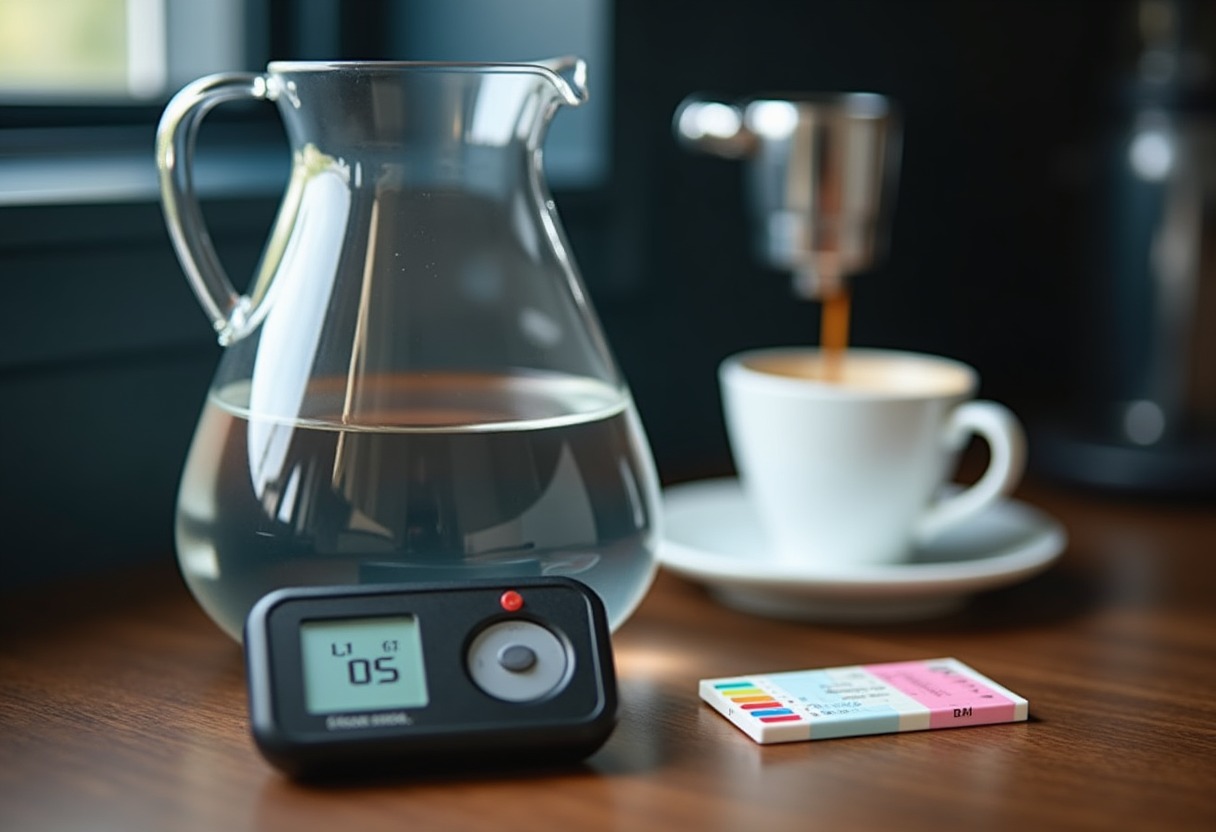
Your espresso tastes flat, your boiler developed scale after six months, and you've dialed in the grind perfectly but something still feels off. The problem isn't your technique or your beans—it's the water you're ignoring. Water makes up 90% of espresso, carries the solubles that create flavor, and determines whether your machine lives five years or fifteen.
Why Water Chemistry Controls Extraction and Machine Health
Water isn't just a neutral carrier. The minerals dissolved in it—primarily calcium, magnesium, and bicarbonates—actively participate in extraction. Magnesium and calcium bind to flavor compounds in coffee, particularly fruity acids and complex esters. Too little mineral content and your espresso tastes hollow; too much and you'll extract bitter, metallic notes while building scale inside your boiler and heat exchanger.
The Specialty Coffee Association publishes water standards that recommend 50-175 ppm total dissolved solids (TDS) and 40-70 ppm calcium hardness for brewing. These ranges balance extraction efficiency with machine protection. Below 50 ppm TDS, you're extracting with essentially distilled water—it pulls fewer compounds and creates thin body. Above 175 ppm, you risk over-extraction and accelerated scale formation that clogs restrictors and damages pumps.
Alkalinity—measured as bicarbonate content—acts as a buffer. High alkalinity neutralizes the acids that create brightness in coffee, flattening the cup. Low alkalinity lets those acids shine but can corrode brass components over time. Target alkalinity between 40-70 ppm for balanced extraction without machine damage.
The Three Water Metrics That Actually Matter
Total Dissolved Solids (TDS) measures everything dissolved in water—minerals, salts, organic matter. For espresso, aim for 75-150 ppm. Measure it with a → Shop water TDS meter on Amazon, which costs $15 and gives you precise readings in seconds. Municipal water in most US cities runs 150-400 ppm straight from the tap—too high for optimal extraction and guaranteed to build scale.
General Hardness (GH) specifically measures calcium and magnesium, the minerals that extract flavor and cause scale. Express it in ppm or in German degrees (°dH), where 1°dH equals 17.8 ppm. Target 3-5°dH (50-90 ppm) for extraction. Below that range, espresso tastes weak and sour; above it, you'll see visible scaling within months. Use a → Shop water hardness test kit on Amazon to measure GH—the same strips aquarium keepers use.
Carbonate Hardness (KH) measures alkalinity, primarily bicarbonates. These buffer acidity and prevent corrosion but flatten coffee brightness when too high. Target 2-4°dH (35-70 ppm KH). If your water is above 4°dH KH, acidic espresso will taste muddy and lifeless, more like dark chocolate than fruit-forward complexity.
Water Filtration Methods: What Actually Works
| Filtration Method | TDS Reduction | Mineral Control | Scale Prevention | Cost | Best For | |------------------|---------------|-----------------|------------------|------|----------| | Carbon Block Filter | 10-20% | Minimal | Low | $20-60/year | Chlorine removal only; preserves existing minerals | | Ion Exchange Softener | 0% | Removes calcium/magnesium, adds sodium | High | $200-800 installed | Scale prevention in hard water areas; requires remineralization for extraction | | Reverse Osmosis | 95-99% | Complete removal | Complete | $150-400 installed | Full control; requires remineralization for flavor | | Inline Espresso Filter | 30-50% | Balanced reduction | Medium-High | $40-100/year | Plug-and-play solution; limited customization |
Carbon filters handle chlorine and organic compounds but barely touch TDS or hardness. They're useful for masking municipal water taste but don't solve extraction or scaling problems. If your tap water is already in range (test it first), a carbon filter like those in a → Shop espresso water filter on Amazon might be enough.
Ion exchange softeners eliminate calcium and magnesium completely—which prevents scale but also removes the minerals that extract flavor. Softened water produces hollow, metallic espresso. If you go this route, you'll need to remineralize the water afterward using specific blends.
Reverse osmosis strips everything and gives you a blank slate. Install a → Shop reverse osmosis water filter on Amazon system, then rebuild water from zero using mineral additives. This is the approach most serious espresso enthusiasts and competition baristas use because it provides complete control over water chemistry. You're building water recipes the same way you'd dial in espresso grind and dose.
Inline espresso-specific filters—like BWT Bestmax or Brita Professional—split the difference. They reduce hardness to safe levels while preserving enough minerals for extraction. Replacement cartridges run $40-50 and last 2-4 months depending on volume. These work if you don't want to obsess over water chemistry but need better results than tap water provides.
Building Espresso Water: The Mineral Recipe Approach
Start with distilled or RO water (TDS near zero). Add back specific minerals using either commercial blends or DIY recipes. The two minerals that matter most are magnesium sulfate (Epsom salt) and sodium bicarbonate (baking soda). Magnesium pulls brighter, fruitier notes; calcium (from calcium chloride) emphasizes body and sweetness; bicarbonate controls acidity buffering.
A proven recipe: 30 ppm magnesium sulfate and 40 ppm sodium bicarbonate in distilled water. This hits roughly 100 ppm TDS with balanced extraction characteristics. Weigh the minerals on a 0.01g scale, mix into a concentrate bottle, then dose it into each gallon. Search "espresso water calculator" for tools that automate the math.
Commercial options like Third Wave Water or Lotus Water packets provide pre-measured mineral blends you drop into distilled water. One packet per gallon typically yields 75-150 ppm TDS with optimized ratios. Use → Shop espresso mineral additives on Amazon if you want consistent results without measuring. Cost runs $1-2 per gallon, which adds up quickly on a dual boiler machine with 2+ liter reservoirs.
If you're already invested in grinder upgrades like those covered in Best Coffee Grinders Espresso, water optimization is the next logical step. Grind quality and water quality interact—great water can't save poor grinding, but poor water will mask even Conical Vs Flat Burr Grinders precision.
Descaling Prevention and Machine Longevity
Scale accumulates when calcium and magnesium precipitate out of solution as water heats above 60°C. In espresso machines, this happens in boilers, heat exchangers, and thermoblocks. Scale reduces thermal efficiency, clogs flow restrictors, and eventually causes pump failure. Preventing it beats descaling after the fact.
If your water is above 150 ppm TDS or 5°dH GH, you'll need to descale every 3-6 months even with regular use. Below 100 ppm TDS and under 4°dH GH, machines can run years between descaling cycles. This matters doubly on heat exchangers and dual boilers where scale hides in chambers you can't access without disassembly.
On machines covered in Best Espresso Machines Home 2026, descaling voids warranties if done incorrectly. Prevention through proper water filtration costs less than one repair visit. Machines without serviceable boilers—common in Best Espresso Machines Under 500—become disposable once scale clogs the system.
Use a bypass line if you're running RO or extremely soft water (below 50 ppm TDS). Some machines need minimal conductivity for their level sensors to function. Aim for 75 ppm minimum TDS to avoid sensor errors, especially on machines with electronic water level detection.
Testing and Adjustment Protocol
Test your baseline tap water first. Measure TDS with a meter, then test GH and KH with aquarium strips. Record these numbers—they'll guide your filtration choices. Most city water ranges 150-350 ppm TDS, 5-15°dH GH, and 3-8°dH KH.
If TDS is under 125 ppm and hardness under 5°dH, you might need only chlorine filtration. If TDS exceeds 175 ppm or hardness tops 6°dH, you need either RO or an inline espresso filter. For hardness above 10°dH, RO is the only practical long-term solution—you'll descale constantly otherwise.
Adjust and taste. Water changes show up most clearly in light roasts, where clarity and acidity matter. If you've been fighting Espresso Tastes Sour Under Extraction Fix issues, check water chemistry before adjusting grind or temperature again. Low mineral content can mimic under-extraction by reducing extraction efficiency.
Keep a log like you would for Espresso Brew Temperature Guide dialing. Note TDS, GH, KH, and how each coffee tastes with different water recipes. Some beans prefer higher magnesium for brightness; others need more calcium for body. Experimentation reveals preferences faster than theory.
Seasonal changes affect municipal water. Cities adjust treatment chemicals, and hardness varies with rainfall and reservoir levels. Retest quarterly if you're using tap water with filtration. RO users have stable water year-round once they establish a mineral recipe.
FAQ
What TDS should I target for espresso extraction? Aim for 75-150 ppm total dissolved solids. Below 75 ppm, extraction efficiency drops and espresso tastes thin because there aren't enough ions to pull flavor compounds from coffee. Above 150 ppm, you risk over-extraction, metallic off-flavors, and accelerated scale buildup in your machine. The sweet spot for most light to medium roasts sits around 100-120 ppm with balanced magnesium and calcium content.
Can I use bottled water in my espresso machine? Yes, but test it first—most bottled water isn't optimized for espresso. Spring water often runs 250-400 ppm TDS with high hardness that causes scaling. Distilled and purified water sits near 0 ppm, which produces flat-tasting shots and may trigger low-water sensors on some machines. If you're using bottled water regularly, pick brands between 80-150 ppm TDS or remineralize distilled water yourself for consistent results.
How often should I descale if I use filtered water? With properly filtered water under 100 ppm TDS and 4°dH hardness, most home users can extend descaling intervals to 12-18 months or longer depending on volume. If you're pulling 3-4 shots daily with ideal water, annual descaling suffices. Higher TDS or hardness shortens this to 6 months or less. Track your water metrics and machine behavior—if extraction times slow or the pump sounds strained, scale is building regardless of your filtration.
Does water temperature affect mineral precipitation and scaling? Absolutely. Calcium carbonate becomes less soluble as water heats above 60°C, which is why scale forms inside boilers and heat exchangers rather than in room-temperature reservoirs. Higher brew temperatures on machines with Espresso Machine Pid Controller setups can accelerate scaling if water hardness is too high. This is why dual boiler machines—which maintain steam boilers at 120°C or higher—show scale damage faster than single boiler setups when water quality is poor.
Can hard water actually improve espresso flavor? Within the right range, yes—hardness minerals drive extraction. Magnesium and calcium ions bind to chlorogenic acids and other flavor compounds in coffee, pulling them into solution. Water with 50-90 ppm hardness extracts noticeably more complexity than soft or distilled water. But once hardness exceeds 100 ppm, you start extracting bitter compounds and metallic notes while causing scaling. The goal is enough hardness for flavor without excess that damages equipment or taste.
Water dictates what your machine and Best Coffee Grinders Espresso setup can achieve—ignore it and you're leaving half the potential in the cup while shortening your machine's life.
Some links on this page are affiliate links. We may earn a small commission if you purchase through them, at no extra cost to you.
As an Amazon Associate we earn from qualifying purchases. This article contains affiliate links; if you buy through them we may earn a small commission at no additional cost to you.