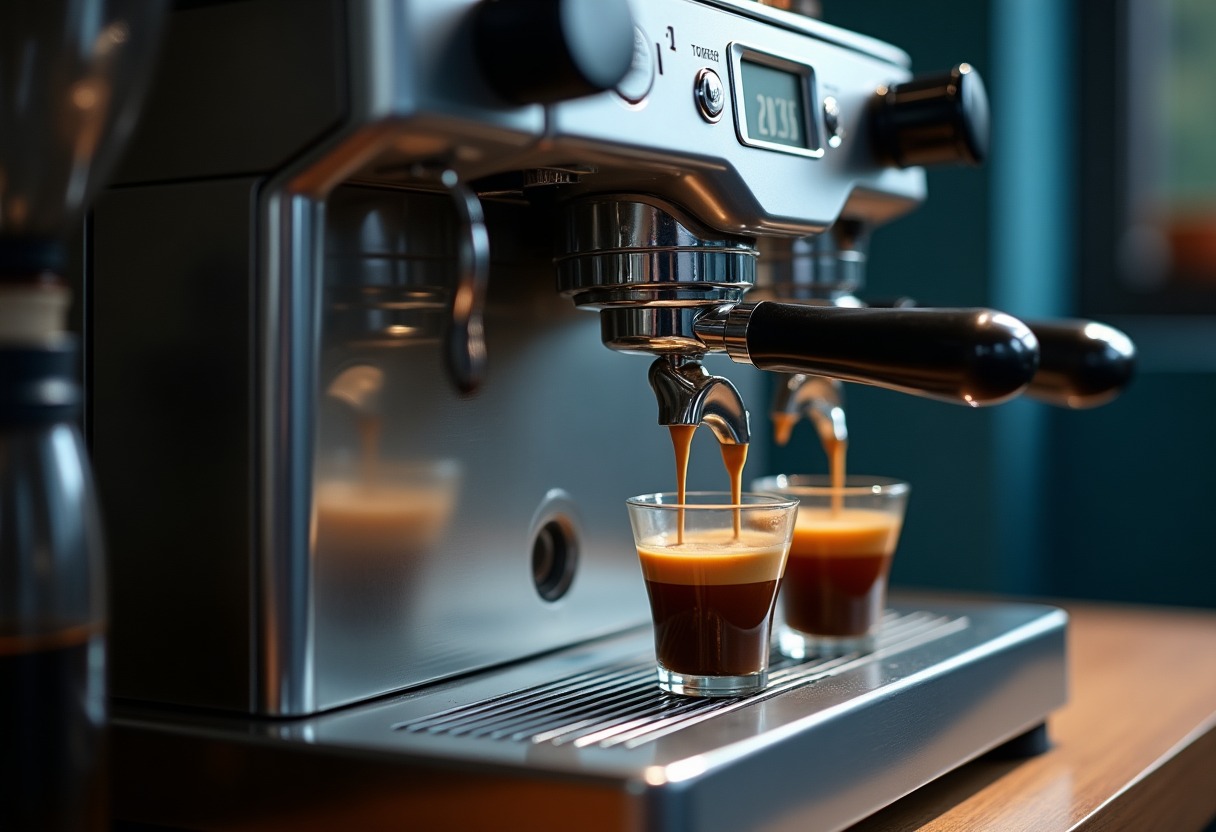
That 195°F brewing temperature stamped on every espresso guide is costing you flavor. Most home baristas lock their machines to this arbitrary middle ground, then wonder why their Ethiopian light roast tastes thin or their Brazilian dark roast turns bitter and harsh.
Why Temperature Matters More Than Pressure
Espresso extraction depends on three variables: grind size, pressure, and temperature. While pressure stays relatively constant at 9 bars, temperature controls which compounds dissolve from your coffee grounds. Higher temperatures extract more quickly and pull different flavor molecules than lower temperatures.
The Specialty Coffee Association sets brewing temperature guidelines for filter coffee at 195-205°F, but these ranges were developed for longer extraction methods. Espresso's 25-30 second contact time creates different extraction dynamics that demand more precision.
Chlorogenic acids, which create brightness and acidity, extract readily at lower temperatures. Maillard reaction products, responsible for caramelized sweetness and body, require higher heat. Quinides and other bitter compounds become dominant above 205°F in dark roasts but may never fully extract from dense light roasts at standard temperatures.
Your machine's temperature stability matters as much as its target temperature. Single boiler machines can swing 15°F during a shot, while dual boiler systems with PID controllers hold within 1-2°F. This consistency lets you dial in precise temperature profiles instead of hoping for lucky averages.
Roast-Specific Temperature Guidelines
Light roasts demand aggressive heat. These beans retain cellular structure and density that resists extraction. Ethiopian and Kenyan beans often need 203-206°F to unlock their fruit-forward acids and floral notes. At 195°F, you'll get sour, underdeveloped shots that taste like they need more extraction time.
Medium roasts work well in the traditional 195-200°F range. Colombian, Guatemalan, and Costa Rican beans typically hit their sweet spot here, balancing acidity with developing caramelization. This is where the standard temperature recommendation actually makes sense.
Dark roasts extract too aggressively at high heat. French and Italian roast beans need 185-192°F to prevent over-extraction of bitter compounds. The cellular walls have broken down during roasting, making extraction easier. Higher temperatures pull harsh tannins and create astringent, burnt flavors.
Bean density also influences your temperature choice. High-grown Central American beans pack tighter than lower-altitude Brazilian beans, even at similar roast levels. Dense beans need 3-5°F more heat to achieve equivalent extraction.
Temperature Profiling vs Fixed Settings
| Roast Level | Starting Temperature | Adjustment Range | Common Origins | Extraction Goal | |-------------|---------------------|------------------|----------------|-----------------| | Light | 203-206°F | ±3°F | Ethiopia, Kenya, Yemen | Bright acids, fruit notes | | Medium-Light | 200-203°F | ±2°F | Guatemala, El Salvador | Balanced brightness | | Medium | 195-200°F | ±2°F | Colombia, Costa Rica | Sweet spot balance | | Medium-Dark | 190-195°F | ±3°F | Brazil, Peru | Body over acidity | | Dark | 185-192°F | ±4°F | Italian, French roast | Minimize bitterness |
Advanced machines allow temperature profiling throughout the shot. Start 5°F higher for the first 8 seconds to boost initial extraction, then drop to your target temperature for the remainder. This technique works especially well with light roasts that need aggressive early extraction but can turn harsh if the heat continues.
Some baristas use declining temperature profiles, starting at 205°F and dropping to 195°F over 30 seconds. This mimics the natural cooling that occurs in traditional lever machines and can smooth out harsh notes in medium-dark roasts.
Essential Temperature Control Equipment
Modern → Shop PID espresso machines on Amazon give you the precision needed for temperature profiling. Look for machines with separate brew boiler PIDs and the ability to program temperature curves throughout extraction.
The Decent DE1 leads temperature control technology, allowing 0.1°F adjustments and complex profiling. La Marzocco GS3 and Slayer Steam LP offer similar precision for those wanting commercial-grade temperature stability at home.
For existing machines without built-in temperature profiling, → Shop espresso group thermometers on Amazon let you monitor actual brew temperature. Scace devices provide the most accurate readings, measuring water temperature at the point of coffee contact.
→ Shop dual boiler espresso machines on Amazon separate milk steaming from brew temperature, preventing the thermal instability that plagues single boiler systems during back-to-back drinks.
Temperature-controlled portafilters are emerging as the next precision tool. These modify traditional portafilters with integrated heating elements and temperature sensors, giving you control independent of machine settings.
Budget-conscious upgraders can install PID controllers on compatible machines. → Shop espresso PID controllers on Amazon work with Gaggia Classic, Rancilio Silvia, and similar prosumer machines.
Advanced Temperature Techniques Most Baristas Miss
Preinfusion temperature differs from extraction temperature. Start your preinfusion 10°F cooler to wet grounds evenly without triggering immediate extraction. This prevents channeling in light roasts and creates more uniform saturation before ramping to full temperature and pressure.
Seasonal temperature adjustments account for bean aging and humidity changes. Beans lose moisture over time, becoming easier to extract. Drop your temperature 2-3°F for beans more than three weeks off roast. In humid environments, beans absorb moisture and may need slightly higher temperatures.
Cup temperature affects perceived flavor more than most realize. Preheat cups to 140-160°F to prevent rapid cooling that mutes aromatics. Cold cups can drop shot temperature by 15°F instantly, changing the flavor profile you worked to extract.
Grind temperature coordination works in reverse of what many expect. If your Best Coffee Grinders Espresso runs hot and heats grounds before brewing, compensate by dropping brew temperature 2-3°F. Hot grounds extract more readily and can lead to over-extraction at standard temperatures.
Water chemistry interacts with temperature in complex ways. Hard water with high mineral content extracts more efficiently and may need temperature reduction. Soft water requires higher heat for equivalent extraction. Test your water's TDS and adjust accordingly.
FAQ
What temperature should I use for medium roast espresso? Start at 197°F for most medium roasts and adjust based on taste. If shots taste sour or thin, increase to 200°F. If they're bitter or harsh, drop to 194°F. Medium roasts have the widest acceptable temperature range, typically 194-200°F, making them forgiving for beginners learning temperature control.
How do I know if my espresso temperature is too high? Over-temperature extractions taste bitter, astringent, and harsh with a dry finish. You'll notice excessive bitterness that doesn't balance with sweetness or acidity. Dark roasts show this most clearly, developing burnt, acrid flavors. Light roasts may taste overly sharp or metallic when brewed too hot.
Can I use the same temperature for all coffee origins? No, origin characteristics significantly impact optimal brewing temperature. Ethiopian beans typically need 203-205°F due to their density and acidity profile. Brazilian beans often work best at 192-197°F because of their naturally low acidity and easier extraction. Adjust temperature based on origin, processing method, and roast level rather than using one universal setting.
Why does my single boiler machine give inconsistent results? Single boiler machines struggle with temperature stability because they switch between brew and steam temperatures. The thermal mass changes temperature slowly, creating 10-15°F swings during heat-up and cool-down cycles. Wait 60-90 seconds after steaming milk before pulling shots, and consider upgrading to a dual boiler system for consistent results.
How much does grind size affect temperature requirements? Finer grinds increase extraction efficiency and may need 3-5°F lower temperatures to prevent over-extraction. Coarser grinds resist extraction and often need higher temperatures. When dialing in shots using How To Dial In Espresso techniques, adjust temperature and grind size together. If you coarsen the grind to slow extraction, increase temperature to maintain flavor balance.
Master temperature control and you'll unlock flavors in your espresso that generic brewing guidelines leave trapped in the grounds.
Some links on this page are affiliate links. We may earn a small commission if you purchase through them, at no extra cost to you.
As an Amazon Associate we earn from qualifying purchases. This article contains affiliate links; if you buy through them we may earn a small commission at no additional cost to you.