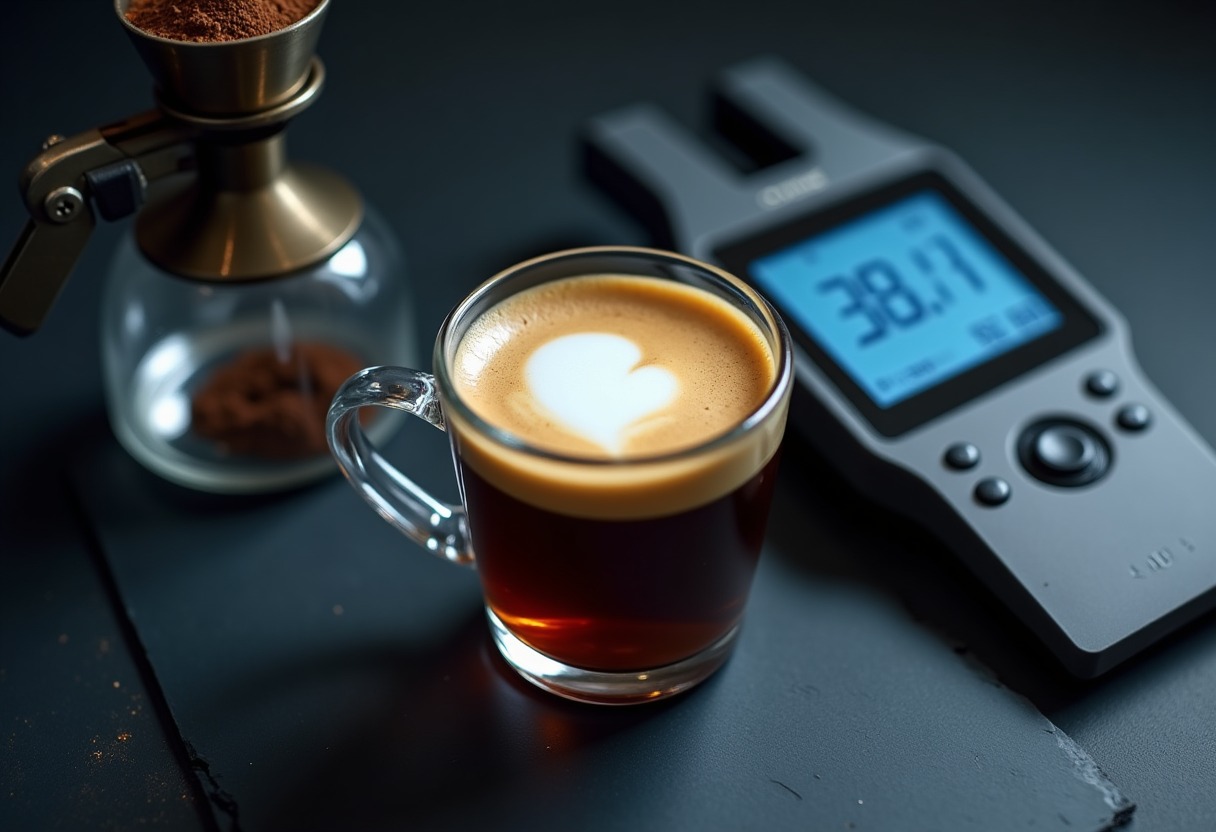
That sharp, mouth-puckering sourness in your espresso isn't a bean defect or roast issue — it's a textbook case of under-extraction. When water doesn't extract enough soluble compounds from coffee grounds, acids dominate the cup before balanced sweetness and body can develop.
Understanding Espresso Extraction Chemistry
Espresso extraction follows a predictable sequence: acids extract first, followed by sugars and aromatic compounds, then finally bitter compounds and tannins. The Specialty Coffee Association defines optimal extraction yield as 18-22% total dissolved solids, where sourness indicates you're pulling significantly below this range.
Under-extraction occurs when water moves through coffee grounds too quickly, contacts insufficient surface area, or lacks adequate thermal energy to dissolve flavor compounds. The result is a thin, acidic shot that lacks the caramelized sweetness and full body of properly extracted espresso. Professional roasters aim for extraction yields that balance these competing elements, but home baristas control the final outcome through grind size, dose, distribution, and brewing parameters.
Temperature plays a crucial role in extraction kinetics. Water below 195°F struggles to extract sufficient sugars and aromatic compounds, leaving acids to dominate. Similarly, grind particles that are too coarse create channels where water bypasses coffee grounds, reducing contact time and extraction efficiency.
Primary Causes of Sour Espresso
Grind size represents the most common culprit behind sour espresso. Coarse grounds create large spaces between particles, allowing water to rush through with minimal resistance. This dramatically reduces contact time and surface area, preventing proper extraction of balancing compounds. Most home baristas using entry-level grinders need to grind significantly finer than they initially think — often 2-3 steps finer on stepped grinders.
Dose ratio directly impacts extraction strength. A typical 18-gram dose yielding 36 grams of liquid (1:2 ratio) in 25-30 seconds provides the foundation for balanced extraction. Reducing dose while maintaining the same yield creates a weaker extraction, emphasizing acids over developed flavors. Conversely, increasing dose without adjusting grind size can slow flow and increase extraction.
Water temperature below optimal range handicaps extraction chemistry. The National Coffee Association recommends 195-205°F for coffee brewing, with espresso typically performing best at 200-204°F. Many home machines struggle to maintain stable temperatures, particularly during back-to-back shots or after milk steaming.
Poor distribution and channeling create uneven extraction where some grounds remain dry while others become over-extracted. This commonly results from clumpy grinds, uneven tamping, or inadequate distribution techniques. The combination produces sour notes mixed with bitter compounds — a particularly unpleasant flavor profile.
Extraction Variables Comparison
| Variable | Under-Extraction Setting | Optimal Setting | Impact on Sourness | |----------|-------------------------|-----------------|-------------------| | Grind Size | Too coarse (8-10 on Baratza Encore) | Fine (4-6 on Baratza Encore) | High — reduces contact time and surface area | | Dose | 15-16g | 18-20g | Moderate — affects strength and flow rate | | Brew Temperature | Below 195°F | 200-204°F | High — limits solubility of balancing compounds | | Extraction Time | Under 20 seconds | 25-30 seconds | Very High — insufficient contact time for sugar extraction |
Equipment Solutions for Better Extraction
A quality burr grinder represents the single most important upgrade for eliminating sour espresso. Blade grinders and low-end burr grinders produce inconsistent particle sizes that create channeling and uneven extraction. The → Shop burr grinder espresso on Amazon selection includes options like the Baratza Sette 270, which offers stepless adjustment crucial for dialing in extraction.
Our Best Coffee Grinders Espresso guide covers grinders specifically designed for espresso's demanding particle size requirements. For budget-conscious upgrades, check out Best Espresso Grinders Under 300 for options that dramatically improve consistency over entry-level models.
Precision scales enable consistent dosing and ratio control. The → Shop precision coffee scale on Amazon category includes models with 0.1-gram accuracy and built-in timers for tracking extraction time. Consistent dosing eliminates one variable while dialing in grind size and timing.
Distribution tools and → Shop espresso dosing funnel on Amazon prevent channeling by ensuring even coffee distribution before tamping. A dosing funnel keeps grounds contained during distribution, while tools like the OCD or Nucleus create uniform coffee beds that extract evenly.
Professional-grade portafilter baskets improve extraction consistency. The → Shop portafilter basket on Amazon selection includes precision baskets with uniform hole patterns that promote even water flow. VST and IMS baskets represent the gold standard for consistent extraction.
Advanced Extraction Optimization Techniques
Pre-infusion dramatically improves extraction consistency by gradually saturating coffee grounds before full pressure application. Many manual lever machines and higher-end semi-automatics offer controllable pre-infusion, allowing 5-10 seconds of low-pressure water contact before full extraction. This technique prevents channeling and ensures even saturation throughout the puck.
Pressure profiling represents the frontier of home espresso control. Machines like the Decent DE1 and La Marzocco GS3 allow precise pressure curves that can extend extraction time while maintaining optimal flow rates. A declining pressure profile — starting at 9 bars and dropping to 6 bars — can increase extraction yield without over-extraction.
Temperature stability requires attention to thermal mass and heating system design. Dual-boiler machines maintain separate, stable temperatures for brewing and steaming. Single-boiler machines with PID controllers offer precise temperature control but require temperature surfing techniques for consistency. Our Best Espresso Machines Home 2026 guide covers machines designed for temperature stability.
Measuring actual extraction yield using a → Shop espresso refractometer on Amazon removes guesswork from dialing in shots. These specialized refractometers measure total dissolved solids in espresso, providing objective feedback on extraction efficiency. Target extraction yields of 18-22% indicate balanced extraction that minimizes sourness.
FAQ
Why does my espresso taste sour even with fine grinds? Fine grinds alone don't guarantee proper extraction — you need adequate dose, proper distribution, and sufficient contact time. If you're grinding fine but pulling shots in 15-20 seconds, the water is still moving too quickly through channels or gaps in your coffee bed. Check your distribution technique, ensure you're using 18-20 grams of coffee, and consider that your grinder might not be grinding as fine as needed. Some entry-level grinders can't achieve the particle size required for proper espresso extraction.
How do I know if my espresso machine's temperature is causing sourness? Brew temperature below 195°F will consistently produce sour, under-extracted espresso regardless of other variables. Use an instant-read thermometer to check water temperature from your group head — run water through the portafilter without coffee and measure immediately. If your machine lacks temperature control, try temperature surfing: run the heating cycle, wait 10-15 seconds after the ready light, then pull your shot. Consistent temperature requires either a PID-controlled machine or careful timing with manual temperature management.
Can old or light-roasted beans cause sour espresso? Light roasts naturally contain more preserved acids and require more aggressive extraction parameters to achieve balance — you'll need finer grinds, higher temperatures, or longer extraction times compared to medium roasts. Beans older than 2-3 weeks past roast date become harder to extract evenly, often producing sour notes mixed with flat, stale flavors. Fresh, appropriately developed beans (medium to medium-dark) are more forgiving and easier to dial in for home baristas. Check our Best Coffee Subscriptions 2026 for consistently fresh beans.
Why do some shots taste sour and bitter at the same time? This frustrating combination indicates severely uneven extraction — some coffee grounds are under-extracted (producing sourness) while others are over-extracted (creating bitterness). Poor distribution, channeling, or inconsistent grind particle sizes cause this problem. Focus on distribution techniques: use a dosing funnel, level coffee before tamping, and ensure your tamper creates an even, level surface. If your grinder produces lots of fines mixed with coarse particles, upgrade to a quality burr grinder designed for espresso.
How long should I wait between grind adjustments when fixing sour espresso? Make grind adjustments one small step at a time and pull at least 2-3 shots at each setting to account for grinder settling and technique variations. Wait for the grinder burrs to clear previous settings — run 1-2 grams of coffee through after each adjustment to purge old grounds. Document your settings, timing, and tasting notes to track progress systematically. Most home baristas adjust too drastically and overshoot optimal extraction, creating a frustrating cycle of over-correction.
Conclusion
Sour espresso signals opportunity rather than defeat — systematic adjustment of grind size, dose, temperature, and distribution will unlock the balanced sweetness and complexity hiding in your beans.
Some links on this page are affiliate links. We may earn a small commission if you purchase through them, at no extra cost to you.
As an Amazon Associate we earn from qualifying purchases. This article contains affiliate links; if you buy through them we may earn a small commission at no additional cost to you.