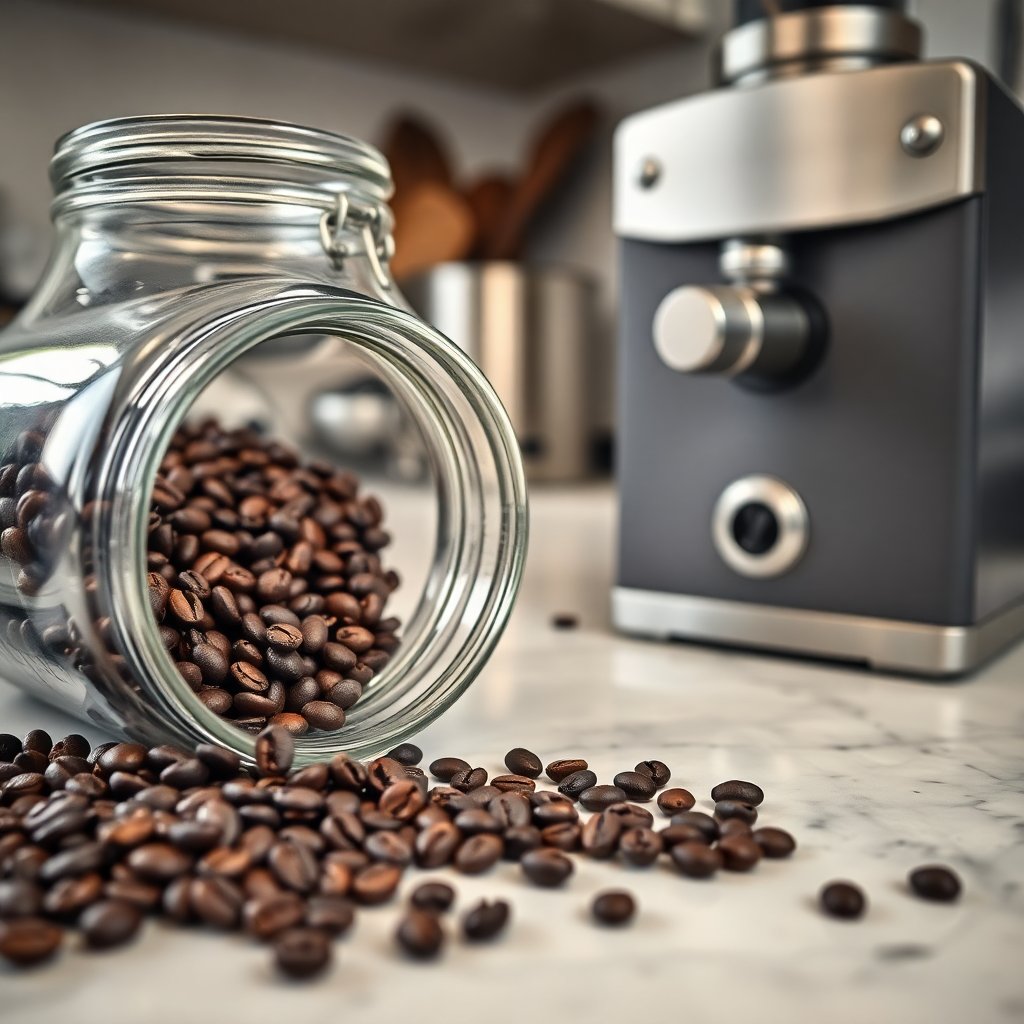
Freezing Coffee Beans for Espresso: The Science, the Payoff, and How to Do It Right
For years, "never freeze your coffee" was repeated as gospel in home-barista circles. The advice was not wrong, exactly — it was aimed at people tossing a half-open bag into a humid freezer and letting it absorb moisture and freezer odors for six months. What that blanket rule missed is that freezing does something genuinely useful to a coffee bean before you grind it, and the research backing that up has gotten hard to ignore.
As an Amazon Associate we earn from qualifying purchases.
The short version: cold beans are more brittle, and brittle beans shatter more evenly in a grinder. For espresso, where grind uniformity is the difference between a balanced shot and a sour-bitter mess, that evenness matters more than almost anything else you can control at home. This guide walks through what the science actually says, what it means for your shots, and exactly how to freeze beans without ruining them.
What the Research Actually Found
The foundational work here is a 2016 study published in Nature's Scientific Reports, which looked at how bean temperature affects the particle size distribution you get out of a grinder. The finding was consistent: colder beans produced smaller and more uniform grounds. You can read the open-access paper directly at nature.com. The mechanism is straightforward — coffee at room temperature deforms and smears a little as the burrs crush it, while frozen coffee fractures cleanly along its structure, closer to how glass breaks than how clay squishes.
More recent coverage has put numbers on the practical upside. Grinding beans straight from the freezer has been reported to tighten particle-size variation meaningfully compared with room-temperature grinding, cutting down on both the oversized "boulders" and the microscopic "fines" that sit at the extremes of the distribution. That narrower spread is exactly what espresso wants.
It helps to be clear about what freezing does and does not do. It does make grinding more uniform and it does slow the staling that oxygen and heat drive. It does not magically improve bad beans, and it will not rescue coffee that was already stale when it went in. Treat it as a tool for preserving and grinding good, fresh coffee better — not as a fix for coffee past its prime.
Why Uniform Grind Matters So Much for Espresso
Espresso is the most unforgiving brew method for grind inconsistency because of the pressure involved. Nine bars of water pushing through a compressed puck will always seek the path of least resistance. When your grounds are a mix of boulders and fines, the fines pack into dense pockets while water races around the boulders, and you get channeling, uneven extraction, and a shot that manages to taste both sour and bitter at once.
A tighter particle distribution gives water a more uniform bed to move through. The practical effects most home baristas notice are:
- Fewer fines, which reduces the harsh, over-extracted edge and muddy body that too many microscopic particles create.
- More predictable flow, so your shot times stop wandering by five or ten seconds for no obvious reason.
- Clearer flavor separation, because the whole puck extracts closer to the same rate instead of some parts racing ahead.
If you have ever dialed in a shot perfectly one morning and then watched the "same" recipe gush the next day, grind inconsistency is a prime suspect. Getting there reliably is the whole point of learning how to dial in espresso, and freezing removes one of the variables that keeps sabotaging you.
The One Big Caveat: Adjust Your Grind Coarser
Here is the practical gotcha nobody warns you about. Because frozen beans shatter more efficiently, the same grinder setting yields a finer average grind than it does with room-temperature beans. If you drop frozen beans into your usual dial-in without changing anything, your first shots will likely choke the machine or run painfully slow and bitter.
The fix is simple: start a notch or two coarser than your normal setting and dial back in from there. Give yourself a couple of throwaway shots to recalibrate. This is one more reason a grinder with fine, repeatable adjustment earns its keep — the ability to make small, exact changes matters even more once cold beans enter the picture. If you are still fighting a grinder that clumps or holds onto grounds, our guide to reducing espresso grind retention covers the mechanical side of getting clean, consistent doses.
Quality burr grinders make all of this repeatable in a way blade grinders simply cannot. → Shop burr coffee grinders for espresso on Amazon
How to Freeze Coffee Beans the Right Way
The old warnings about freezing coffee were really warnings about doing it carelessly. Do it deliberately and the risks mostly vanish. The enemies are moisture and repeated temperature swings, so the whole method is built around defeating those two things.
1. Portion before you freeze
Divide your beans into single-dose or single-session portions before they go in. This is the single most important step. Every time you open a container in the freezer, warm humid air rushes in and condenses on the cold beans; thawing and refreezing the same bag over and over is what actually degrades coffee. Freeze in small amounts so you only ever pull out what you will use that day.
Small airtight vials or portion bags made for this are ideal — many home baristas weigh out exact espresso doses into individual tubes. → Shop airtight coffee bean storage vials on Amazon
2. Use a genuinely airtight, moisture-proof container
A regular zip bag is not enough on its own because it traps air and lets moisture creep in over weeks. Use vacuum-sealed bags or containers with a real gasket seal, and push out as much air as you can. The drier and more sealed the environment, the longer the beans keep.
3. Grind straight from frozen — do not thaw first
This is the part people get backwards. You want to grind the beans while they are still cold, because that brittleness is the entire benefit. Take a portion out and put it right into the hopper or your single-dosing cup. Do not leave beans on the counter to "come up to temperature" first.
If you single-dose, this workflow fits neatly into a cold-bean routine; our walkthrough of the single-dose espresso grinder workflow pairs perfectly with pulling one frozen portion at a time.
4. Let the ground coffee warm, not the beans
Some baristas worry about condensation on the grounds. In practice, ground coffee has so much surface area that it warms to room temperature within a minute or two, and the small amount of condensation on freshly ground frozen coffee has not been shown to hurt espresso in any meaningful way. Grind, give it a moment, prep your puck as usual.
5. Do not refreeze a thawed portion
Once a portion has come fully up to room temperature, use it — do not send it back to the freezer. This is exactly why portioning matters. A thawed-and-refrozen bean is where the real damage happens.
The community discussion at home-barista.com is worth reading if you want to see how experienced home baristas have refined these details over years of trial and error.
A Precise Dose Makes the Whole Thing Work
Freezing tightens your grind, but you still need to control the other big variable: dose weight. Pulling exact, repeatable doses is what lets you actually see the improvement freezing gives you, because you are no longer guessing at how many grams went into the basket. A good scale that reads to a tenth of a gram turns your setup into something you can measure and repeat.
→ Shop coffee scales with 0.1g accuracy on Amazon
Weigh the beans before they go into their storage vials so each portion is already a known dose, and weigh again on the way out if you want to be exact. Consistency compounds: a uniform grind plus a precise dose plus a level puck is how you get the same good shot every single morning.
Is It Worth the Trouble?
For casual drip coffee, freezing is a nice-to-have. For espresso, the case is stronger, because espresso amplifies every inconsistency and rewards every improvement in uniformity. If you are already fussing over distribution, tamping, and dial-in, grinding frozen beans is one of the highest-impact upgrades left that does not cost you a new machine.
The honest caveat is that the grinder still does most of the heavy lifting. Freezing narrows the particle spread from whatever grinder you have, but it cannot turn a mediocre grinder into a great one — it just shifts your existing curve in the right direction. If your beans taste flat or your grinder produces a genuinely wide distribution, that is a separate problem to solve first. Freshness also still matters: freezing preserves good coffee, it does not resurrect stale coffee.
Try it for a week. Portion a bag into daily doses, freeze them, grind straight from cold, and dial your grinder a couple of notches coarser to compensate. Compare shot times and taste against your room-temperature baseline. Most people who run that experiment carefully do not go back — the shots simply behave more predictably, and predictability is the entire goal of home espresso.
Prices and availability change frequently; check current listings before buying. This article is general home-barista guidance, not food-safety or dietary advice.
As an Amazon Associate we earn from qualifying purchases. This article contains affiliate links; if you buy through them we may earn a small commission at no additional cost to you.