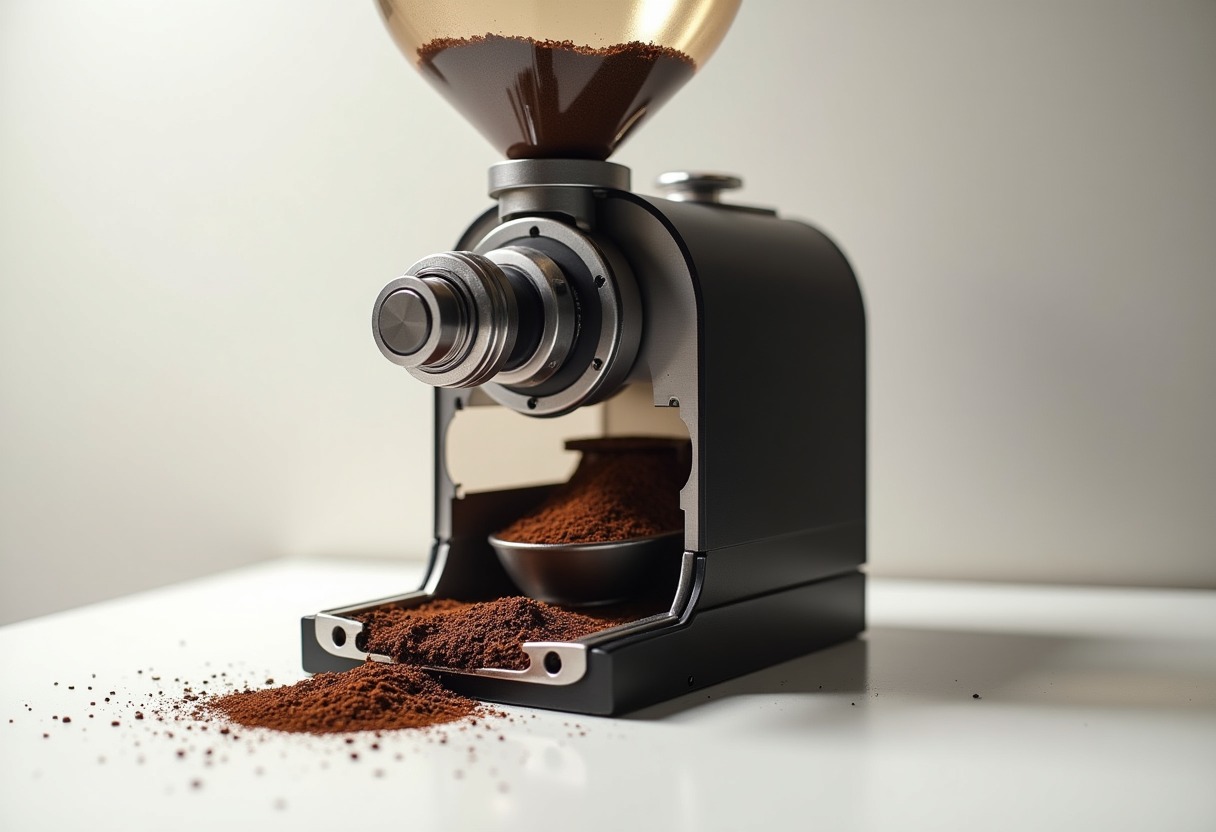
Your grinder is quietly sabotaging your espresso shots by hoarding coffee grounds from previous sessions. Most grinders retain between 0.3 to 2.5 grams of coffee in their burr chamber and chute — stale grounds that mix with fresh coffee and throw off your dose weight by up to 15%.
Why Espresso Grind Retention Destroys Shot Consistency
Grind retention happens when coffee particles stick to burr surfaces, lodge in the grinder chute, or remain trapped in the grinding chamber after you've finished dosing. The Specialty Coffee Association recognizes grind consistency as a critical factor in extraction quality, but retention creates a hidden variable that undermines your dialing-in efforts.
When you grind 18 grams for your portafilter, you might only receive 16.5 grams of fresh coffee mixed with 1.5 grams of yesterday's grounds. This coffee grind exchange contaminates your dose with oxidized particles that extract differently than fresh grounds, creating unpredictable flavor variations even when you maintain identical brewing parameters.
The retention problem compounds over multiple shots. Your first espresso of the day tastes different from your third because the grinder has gradually purged old grounds while accepting new retention from each dose. Professional baristas combat this by running purge doses at the start of each service, but home users often skip this wasteful practice.
How Different Grinder Types Handle Retention
Retention varies dramatically between grinder designs, with some mechanisms creating natural retention points while others minimize coffee accumulation.
Stepped grinders with adjustment collars typically retain more coffee because particles settle in the threading and calibration mechanism. The Mazzer Mini, for example, holds approximately 2.2 grams in normal operation — enough to skew two full doses.
Stepless grinders generally perform better because they lack the threading gaps that trap grounds, but their retention still depends on burr chamber geometry and chute design. The Eureka Mignon series retains around 0.8 grams thanks to its compact chamber, while larger commercial-style grinders can hold 3+ grams.
Single dose grinders like the Fellow Ode or Eureka Atom 65 minimize retention through vertical feed designs and bellows systems that force air through the grinding chamber. These grinders achieve retention rates below 0.2 grams when used properly with → Shop grinder retention bellows on Amazon.
| Grinder Type | Typical Retention | Primary Retention Points | Purge Dose Needed | |--------------|-------------------|--------------------------|-------------------| | Budget Stepped | 1.5-2.5g | Burr threading, chute bends | 3-5g | | Premium Stepped | 0.8-1.5g | Calibration collar, chamber | 2-3g | | Stepless Commercial | 1.2-2.8g | Large chamber, exit chute | 4-6g | | Single Dose | 0.1-0.5g | Minimal chamber design | 0.5-1g |
Measuring Your Grinder's True Retention Rate
Accurate retention measurement requires a controlled process that accounts for both immediate and gradual coffee release. The best method involves grinding a known weight, collecting all output, then measuring the difference — but this basic approach misses retention that releases over subsequent grinds.
Start with the RDT (Ross Droplet Technique) to reduce static retention. Lightly dampen your beans with a few drops of water before grinding to minimize grounds that cling electrostatically to burr surfaces. This step alone can reduce measured retention by 20-40% in dry environments.
Grind exactly 20 grams of medium-roast coffee at your normal espresso setting. Collect all visible grounds, then tap the grinder body firmly and run the motor for 2-3 seconds to release additional particles. Weigh your total collection. The difference reveals your grinder's mechanical retention.
For retention that releases gradually, perform the coffee grind exchange test. After your initial measurement, grind another 20 grams of a visually distinct coffee (dark roast vs. light roast works well). You'll notice mixed grounds in the first 0.5-2 grams of output — this shows how much previous coffee your grinder gradually releases.
The most accurate retention measurement requires multiple cycles. Grind 20 grams five times in succession, weighing each output. Your retention equals the difference between input and output for the first grind, while subsequent grinds reveal the exchange pattern. Professional → Shop coffee dosing funnels on Amazon make this process cleaner and more precise.
Proven Solutions for Reducing Grinder Retention
The most effective retention reduction combines mechanical modifications with technique adjustments. Single dose grinding eliminates the largest retention source — hopper weight that forces grounds through the system at inconsistent rates.
Convert hopper-fed grinders to single dose operation by removing the hopper and weighing beans before each grind session. → Shop single dose espresso grinders on Amazon purpose-built for this workflow eliminate retention points through vertical bean paths and minimal chamber designs.
Bellows systems provide the most dramatic retention reduction for existing grinders. These rubber bladders attach to your grinder's bean chamber and force positive air pressure through the grinding mechanism, pushing trapped particles toward the exit chute. Quality bellows reduce retention by 60-80% in most grinders when used consistently.
The RDT technique reduces static-based retention that causes grounds to stick to metal surfaces. Add 0.1-0.3 grams of water (roughly 2-6 drops) per 18-gram dose. Too much water creates paste-like grounds that actually increase retention, so start with less and adjust based on your climate and bean roast level.
Grinder popcorning occurs when beans bounce in an empty chamber rather than engaging the burrs properly. This creates inconsistent particle size and increases retention as bouncing beans wear smooth chamber surfaces that should grip coffee. Prevent popcorning by feeding beans slowly or using a → Shop grinder retention hopper on Amazon designed for controlled feeding.
Some advanced users modify their grinders by polishing burr chambers or adding PTFE coating to reduce surface friction. These modifications void warranties and require precision work, but they can reduce retention by an additional 0.1-0.3 grams in compatible grinders.
Advanced Retention Management for Consistency Obsessives
Temperature control affects retention more than most home baristas realize. Metal burr chambers expand and contract with ambient temperature changes, creating variable retention throughout the day. Grinders in temperature-controlled environments show 15-20% less retention variation than those exposed to kitchen temperature swings.
Pre-heating your grinder reduces thermal retention effects. Run 2-3 empty motor cycles before your first grind of the day to bring burr chambers to operating temperature. This technique particularly helps grinders with large thermal mass like the Mahlkönig EK43 or Mazzer Major.
Static control extends beyond RDT. Grounding yourself and the grinder reduces electrostatic buildup that attracts grounds to chamber walls. Some users install anti-static mats under their grinders or ground the motor housing, though these modifications require electrical knowledge and void warranties.
The purge dose calculation depends on your grinder's retention pattern. Most grinders release 70-80% of retained coffee in the first 1-2 grams of subsequent grinding, then gradually release the remainder over 3-5 more grams. Calculate your optimal purge dose by measuring output contamination over multiple cycles — usually 1.5-2x your measured retention works best.
Workflow timing affects retention accumulation. Grinders left idle for more than 30 minutes often show increased retention due to oil migration and static buildup. Some professionals run brief motor pulses every 15-20 minutes during service to prevent grounds from settling in retention points.
Understanding your specific grinder's retention personality allows you to compensate rather than eliminate the problem. If your grinder consistently retains 1.2 grams, dose 19.2 grams to achieve an 18-gram target. This approach works when retention remains consistent but fails if retention varies significantly between sessions.
For workflow efficiency, consider using different grind settings for different coffee types and accepting the retention exchange. Light roasts often benefit from the small amount of darker retained coffee, which adds body without overwhelming the delicate origin flavors. This technique requires careful cupping to verify compatibility but can actually improve some blends.
FAQ
Q: How much espresso grind retention is normal for a quality home grinder? Quality home grinders typically retain 0.5-1.5 grams under normal operation, with premium single-dose models achieving retention below 0.3 grams. Retention above 2 grams indicates poor chamber design or accumulated coffee oils that need cleaning. Even expensive grinders like the Niche Zero or Weber EG-1 retain some coffee — perfect zero retention remains impossible due to surface tension and microscopic chamber irregularities. Your goal should be consistent retention rather than zero retention, as predictable behavior allows dose compensation.
Q: Does grinder retention really affect espresso taste or just dose accuracy? Grinder retention significantly impacts both taste and dose accuracy, often more than home baristas realize. Retained coffee oxidizes rapidly, developing stale flavors that muddy your espresso's clarity and brightness. A 1.5-gram retention mixing with fresh grounds can shift extraction yield by 8-12% and introduce bitter compounds from degraded oils. The taste impact becomes more pronounced with light roasts, where retained dark coffee can overpower delicate fruit and floral notes. Dose accuracy matters because espresso recipes depend on precise coffee-to-water ratios — a 1-gram retention variance changes your brew ratio from 1:2 to 1:2.3.
Q: Can I use the grinder popcorning fix to reduce retention in any grinder? Grinder popcorning indicates insufficient bean feeding rather than a retention problem, but solving popcorning often reduces retention as a side effect. Feed beans slowly into the chamber, ensuring each bean engages the burrs before adding more coffee. This technique works best with conical burr grinders that rely on gravity feeding, but flat burr grinders with vertical chambers also benefit from controlled feeding. However, some grinders create popcorning due to chamber geometry rather than feeding technique — these require bellows or other mechanical solutions. Check your Best Coffee Grinders Espresso guide for specific grinder feeding recommendations.
Q: Should I clean my grinder more often if retention is high? High retention requires more frequent cleaning because trapped coffee oils turn rancid and contaminate future doses with bitter, metallic flavors. Clean grinders with retention above 1.5 grams weekly rather than monthly, using → Shop burr grinder cleaning tools on Amazon to remove accumulated oils from retention points. Focus cleaning efforts on burr threading, adjustment mechanisms, and chute corners where grounds typically accumulate. Some grinders benefit from compressed air cleaning between deep cleanings — blow out loose grounds from retention areas without disassembling the grinding mechanism. Schedule deep cleaning based on coffee volume rather than time: every 2-3 pounds of coffee for high-retention grinders.
Q: Will switching to single dose grinding completely solve my retention problems? Single dose grinding dramatically reduces but doesn't eliminate retention, typically achieving 0.1-0.5 grams compared to 1.5+ grams in hopper-fed operation. The remaining retention comes from burr surface friction and microscopic chamber imperfections that no design can completely eliminate. Single dosing provides consistent retention rather than zero retention — the key benefit for espresso dialing-in. You'll still need occasional purge doses when switching between different coffee types, but daily shot-to-shot consistency improves significantly. Combine single dosing with bellows and RDT for the lowest achievable retention in any grinder design.
Converting your grinder to single-dose operation and implementing proper retention management transforms inconsistent espresso into predictable, dial-able shots that respond reliably to your brewing adjustments.
Some links on this page are affiliate links. We may earn a small commission if you purchase through them, at no extra cost to you.
As an Amazon Associate we earn from qualifying purchases. This article contains affiliate links; if you buy through them we may earn a small commission at no additional cost to you.