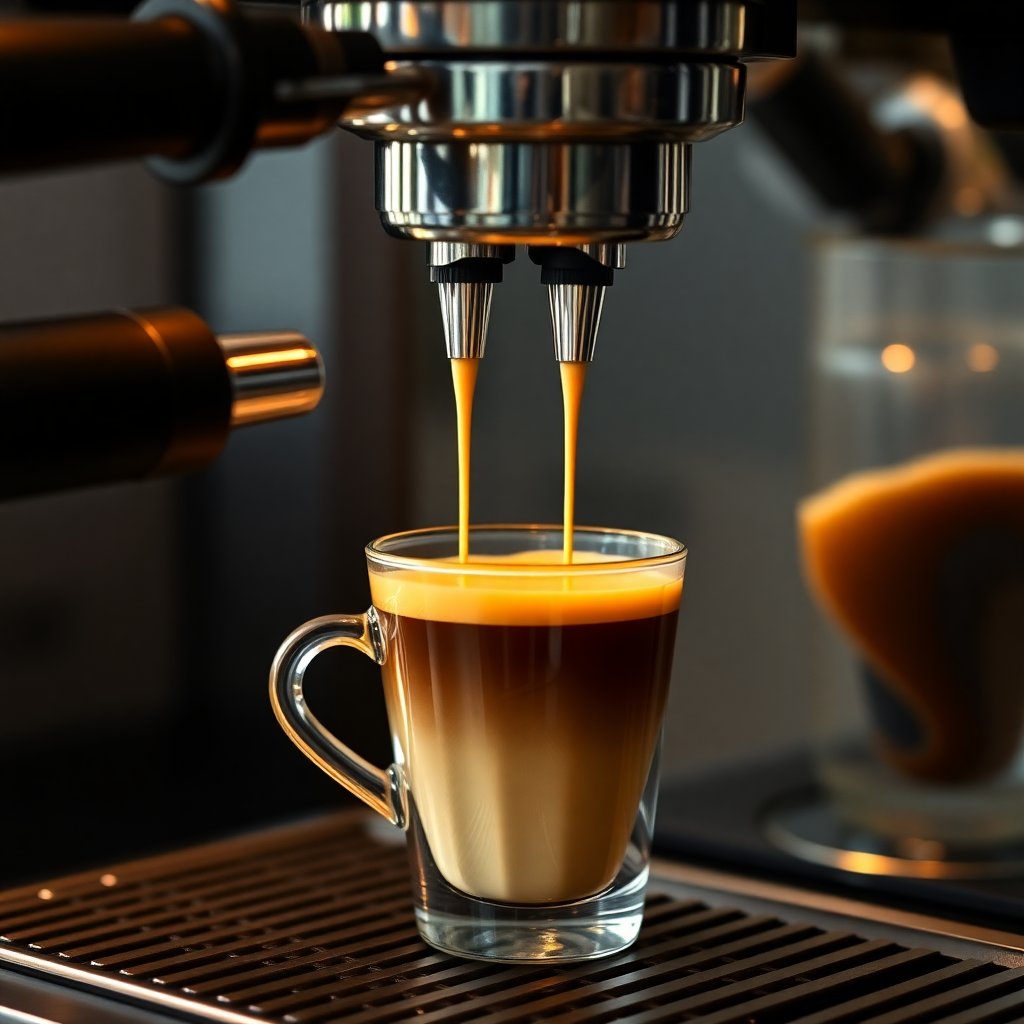
That harsh, drying bitterness that lingers at the back of your throat after a shot is not a sign you bought bad beans. Nine times out of ten it is over-extraction: water has pulled too much out of the grounds, dragging bitter and astringent compounds into the cup long after the sweet and balanced flavors were already captured. The good news is that over-extraction is one of the most fixable problems in home espresso, because every lever that causes it is a lever you control.
As an Amazon Associate we earn from qualifying purchases. Product links below are search links so you can compare current options and prices.
What Over-Extraction Actually Is
Espresso extraction happens in a predictable order. Acids and fruity, bright compounds come out first. Sugars and the caramel-like sweetness follow. Then, last, come the heavier bitter compounds, tannins, and drying polyphenols. A great shot stops while the balance of sweet and bright still dominates. Over-extraction is simply going too far down that sequence, so the late, harsh compounds start to pile up and overwhelm everything pleasant that came before.
The Specialty Coffee Association describes an extraction-yield sweet spot of roughly 18 to 22 percent of the coffee's mass dissolved into the cup, documented in its coffee standards. Push past that upper end and the cup turns bitter, hollow, and ashy. Over-extraction is the mirror image of the sour, sharp cup you get from under-extraction — same spectrum, opposite ends. Knowing which side of the line you are on is the whole game, so your first job is to taste accurately.
Bitter vs. Sour: Read the Cup Correctly
Before you change anything, confirm you are actually tasting over-extraction and not something else. Over-extracted espresso tends to be:
- Bitter and harsh, like over-steeped tea or burnt toast
- Drying or astringent, leaving your tongue feeling rough and your cheeks puckered in a chalky rather than tart way
- Hollow or flat, with a short, unpleasant finish instead of lingering sweetness
- Dark and ashy, sometimes with a scorched note
Contrast that with under-extraction, which is sharp, lemony-sour, salty, and thin. A quick gut check: sour and tart usually means stop sooner or grind coarser, while bitter and drying usually means stop sooner in the other direction — pull less water through or grind coarser. If both bitterness and sourness show up at once, that is usually a channeling or distribution problem, not a dial-in problem, and we will cover that below.
One caveat worth stating plainly: very dark roasts carry inherent roast bitterness no amount of dialing can fully remove. If you are working with an oily, second-crack-heavy roast, some bitterness is baked in. Everything here will minimize extraction-driven bitterness, but it cannot turn a charred roast into a sweet one.
The Usual Suspects, in Order of Impact
1. Grind Too Fine
This is the number one cause. A finer grind creates more surface area and slows water flow, both of which increase extraction. Push the grind too fine and water lingers in the puck, dissolving those late bitter compounds you wanted to leave behind. The shot often runs slow, drips rather than flows, and tastes acrid.
The fix is to grind coarser by a small amount, then re-taste. On a quality grinder this is one or two steps, or a few degrees of a stepless collar. If your current grinder cannot hold a consistent setting or jumps from too-fast to too-slow with no middle ground, the grinder itself is the bottleneck. A capable espresso burr grinder with fine adjustment is the single most impactful upgrade for shot quality, and it matters far more than the machine for taming bitterness. If you want help choosing, our guide to dialing in espresso walks through grind adjustment step by step.
2. Brew Ratio Pulled Too Long
Ratio is the relationship between your dose of dry coffee and the weight of liquid espresso in the cup. A standard starting point is 1:2, meaning an 18-gram dose yields about 36 grams of espresso. The longer you let the shot run, the more water passes through the same grounds, and the more of those late bitter solubles end up in the cup. A shot pulled to 1:3 or 1:4 without any other change will almost always taste more bitter and more diluted at once.
You cannot manage ratio by eye. You need to weigh the dose going in and the liquid coming out, which means a small, fast espresso scale with a timer sitting on the drip tray. Cap the shot at your target yield even if it looks like it wants to keep flowing. If 1:2 still tastes harsh, try shortening to 1:1.5 — a modern "ristretto-ish" ratio that captures the sweet early extraction and stops before the bitter late phase. Pulling a slightly shorter shot is one of the fastest ways to trade bitterness for sweetness.
3. Water Too Hot
Hotter water extracts faster and reaches deeper into those bitter compounds. Most espresso lives happily between 195 and 205 degrees Fahrenheit, and bitterness often creeps in at the top of that range or above. If your machine runs hot or lacks temperature control, you may be over-extracting on temperature alone even with a sensible grind and ratio.
On a machine with a PID or adjustable temperature, drop the brew temperature by two or three degrees and re-taste. Lighter roasts generally want the hotter end of the range, while darker roasts want cooler water precisely because they are already prone to bitterness. If your machine has no temperature control, our brew temperature guide covers workarounds like temperature surfing and cooling flushes to rein in an overly hot group.
4. Shot Time Too Long
Time is a symptom as much as a cause, but it is a useful readout. A typical balanced shot reaches its target yield in roughly 25 to 32 seconds including pre-infusion. If your shot is taking 40 seconds or more to hit a normal yield, water is spending too long in contact with the coffee and dragging out bitterness. Usually the underlying culprit is grind-too-fine or dose-too-high, so fix those rather than chasing the clock directly. Still, watching the timer tells you whether your changes are moving things in the right direction.
When Bitterness Is Really a Distribution Problem
Here is the trap that sends people in circles: a shot can be over-extracted in some channels and under-extracted in others at the same time, producing a cup that tastes simultaneously bitter and sour. That is channeling — water finding low-resistance paths through an unevenly packed puck, blasting through some spots while barely touching others.
No amount of grind or ratio tweaking fixes channeling, because the problem is physical, not chemical. The fix is puck preparation:
- Distribute the grounds evenly before tamping. A WDT distribution tool with fine needles breaks up clumps and levels the bed, which dramatically reduces channeling on most home setups.
- Tamp level and consistent. A tilted or uneven tamp invites water to favor the thin side. Pressure matters less than levelness.
- Watch the shot with a bottomless portafilter. If you see spritzing, spraying, or a fast-moving blonde jet to one side, that is channeling you can see and correct.
If a shot tastes harsh and thin at the same time, start with distribution, not the grinder.
A Clean, Repeatable Fix Protocol
Change one variable at a time or you will never know what worked. Here is the order that solves the most bitter shots fastest:
- Lock your ratio. Set a target, such as 18 grams in and 36 grams out, and weigh both ends on a scale. Do not change this while you troubleshoot.
- Fix puck prep. Distribute evenly, tamp level. Rule out channeling before touching the grinder.
- Coarsen the grind one or two steps. Re-pull and taste. Coarser almost always reduces bitterness because it speeds flow and lowers extraction.
- Shorten the ratio if still bitter. Drop from 1:2 toward 1:1.5 to stop before the bitter phase.
- Lower brew temperature two or three degrees. Especially for darker roasts.
- Re-taste and note the result. Keep a simple log of dose, yield, time, grind setting, and flavor so you can repeat a good shot instead of rediscovering it.
Work top to bottom and stop as soon as the cup balances. You will usually land it within a few shots.
Beans, Freshness, and the Limits of Dialing
Even flawless technique cannot rescue certain inputs. Beans roasted very dark are designed to taste roasty and bitter; switching to a medium roast often does more for sweetness than any parameter change. Stale beans also skew harsh and flat as they oxidize, so check the roast date and favor coffee roasted within the last few weeks. And water chemistry plays a quiet role: water that is too hard or too alkaline can accentuate bitterness and dullness, which is why many enthusiasts filter or build their own brewing water once the obvious levers are handled.
Those are refinements, though. For the overwhelming majority of bitter shots, the answer is a coarser grind, a tighter ratio, slightly cooler water, and even puck prep — in that order. Nail those four and you will spend far less time wincing at the first sip and far more time enjoying a shot that finishes sweet.
As an Amazon Associate we earn from qualifying purchases. This article contains affiliate links; if you buy through them we may earn a small commission at no additional cost to you.