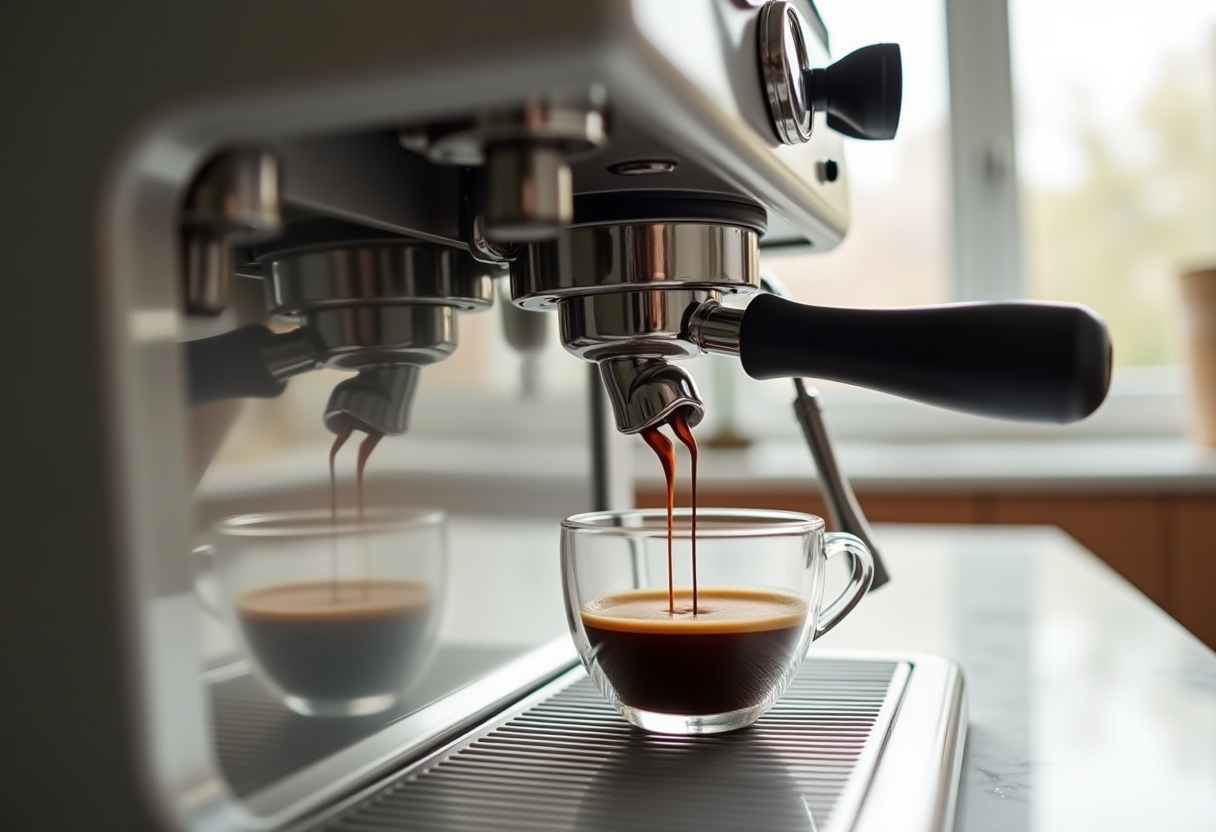
Your espresso pre-infusion timing controls more flavor variables than grind size, dose, or temperature. The pressure curve you apply during those first 5-15 seconds determines whether your shot extracts evenly or channels, whether sweetness balances acidity, and whether you taste origin character or bitter compounds.
Why Pre-Infusion Pressure Profiling Matters More Than You Think
Pre-infusion saturates coffee grounds at low pressure before full 9-bar extraction begins. This wetting process allows CO2 to escape while water penetrates the puck structure uniformly. Without proper pre-infusion, water finds the path of least resistance through your puck, creating channels that over-extract some coffee while leaving other areas dry.
The Specialty Coffee Association recognizes pre-infusion as critical for even extraction, but their brewing standards don't specify optimal timing or pressure curves. That's where understanding the relationship between espresso bloom time and extraction becomes crucial for home baristas serious about shot quality.
Traditional pump-driven machines apply 0.5-2 bars during pre-infusion, while manual lever machines can provide precise pressure control from 0.1 to 15 bars. This range gives you tools to manipulate extraction in ways that fixed-pressure systems simply can't match.
Understanding Pre-Infusion Pressure Profiles
Low pressure pre-infusion starts at 0.5-1 bar for 3-8 seconds, allowing gentle saturation without forcing water through dry grounds. This approach works especially well for light roasts and single origins where you want to preserve delicate flavor compounds without extracting harsh acids.
Medium pressure profiles use 2-4 bars for 5-10 seconds, creating more aggressive saturation that suits medium roasts and blends. This pressure range initiates extraction sooner while maintaining enough control to prevent immediate channeling.
High pressure pre-infusion applies 4-6 bars for 2-5 seconds, quickly saturating the puck before dropping to atmospheric pressure briefly, then ramping to full extraction pressure. This technique works with dark roasts and very fresh coffee that needs rapid degassing.
Flow profiling machines like the → Shop pressure profiling espresso machines on Amazon let you create custom pressure curves, combining multiple phases within a single shot. You might start with 1 bar for 4 seconds, ramp to 3 bars for 6 seconds, then proceed to 9 bars for the remainder of extraction.
Pre-Infusion Timing Comparison Table
| Profile Type | Pressure Range | Duration | Best For | Extraction Effect | |--------------|----------------|----------|----------|-------------------| | Low Pressure | 0.5-1 bar | 6-12 seconds | Light roasts, single origins | Even saturation, preserves brightness | | Medium Pressure | 2-4 bars | 4-8 seconds | Medium roasts, everyday brewing | Balanced extraction, good body | | High Pressure | 4-6 bars | 2-5 seconds | Dark roasts, fresh coffee | Quick degassing, full extraction | | Variable Flow | 0.5-9 bars | 8-15 seconds | All roast levels | Maximum control, customizable profiles |
Machine Categories for Pre-Infusion Control
Manual lever machines provide the most precise pre-infusion control. Models like those found through → Shop dual boiler espresso machines on Amazon let you apply exactly the pressure you want for exactly the time you choose. You control bloom time through lever position and can create pressure curves impossible with automated systems.
Semi-automatic machines with pre-infusion settings offer programmable timing but fixed pressure levels. Most apply 2-3 bars for user-selected durations between 2-10 seconds. These work well for consistent daily brewing once you dial in optimal settings for your coffee and Best Coffee Grinders Espresso.
Flow control valves retrofit onto many E61 group head machines, adding variable pre-infusion to existing setups. → Shop espresso flow control valves on Amazon install between your group head and portafilter, letting you manually control flow rate during extraction.
Programmable machines store multiple pre-infusion profiles in memory. → Shop programmable espresso machines on Amazon allow you to experiment with different profiles for different coffees, switching between them with button presses.
Pressure gauges help you monitor and adjust pre-infusion pressure in real-time. → Shop espresso pressure gauges on Amazon install on your group head to display exact pressure throughout the extraction cycle.
Advanced Pre-Infusion Techniques Most Guides Miss
Temperature stepping during pre-infusion creates additional extraction control. Start pre-infusion 5-8 degrees below your target brew temperature, allowing grounds to saturate before applying full heat. This prevents immediate extraction of harsh compounds while ensuring even temperature distribution throughout the puck.
Pulse pre-infusion alternates between low pressure and atmospheric pressure in 1-2 second cycles. Apply 2 bars for 2 seconds, drop to 0 bars for 1 second, repeat 3-4 times before full extraction. This technique works especially well with very fresh coffee that needs aggressive degassing.
Reverse pre-infusion starts with standard low pressure, then briefly drops pressure before ramping to extraction pressure. This pause allows additional CO2 escape and can improve extraction uniformity in dense, fine grinds that might otherwise channel.
Pre-infusion timing must coordinate with your How To Dial In Espresso process. Longer pre-infusion generally requires slightly coarser grinds to maintain proper extraction time, while shorter pre-infusion works with finer grinds that might otherwise over-extract.
The relationship between pre-infusion and Espresso Extraction Yield Target Range becomes critical when chasing specific flavor profiles. Higher pre-infusion pressure increases early extraction, requiring adjustments to grind size or total shot time to maintain target yield percentages.
FAQ
How long should espresso pre-infusion timing be for light roast coffee? Light roast coffee benefits from 6-12 second pre-infusion at 0.5-1 bar pressure. The lower density and higher acidity of light roasts require gentle, extended saturation to avoid extracting harsh acids while ensuring even water penetration. Start with 8 seconds at 1 bar, then adjust based on taste - increase time if shots taste sour or uneven, decrease if they become overly bright or thin.
What pressure should I use during espresso bloom time? Optimal bloom pressure depends on your coffee's roast level and age. Fresh coffee (0-14 days post-roast) needs 0.5-1 bar to allow proper degassing, while older coffee can handle 2-3 bars for faster saturation. Very dark roasts work well with 2-4 bars for 4-6 seconds, while light roasts prefer 0.5-1.5 bars for 8-12 seconds. Monitor your shots for channeling signs - if water breaks through unevenly, reduce pressure or extend timing.
Can pre-infusion pressure profile fix sour espresso shots? Pre-infusion can help fix sour shots caused by uneven extraction, but it won't solve fundamental grind or dose problems. Extend your pre-infusion timing to 10-15 seconds at 1-2 bars pressure, allowing more complete saturation before extraction begins. This technique helps extract more soluble compounds from areas of the puck that might otherwise remain under-extracted. However, if your shots remain sour after optimizing pre-infusion, check your Espresso Tastes Sour Under Extraction Fix guide for grind and dose adjustments.
How does low pressure pre-infusion affect espresso extraction timing? Low pressure pre-infusion extends total shot time by 5-15 seconds but improves extraction evenness significantly. The additional saturation time means your main extraction phase may extract faster than normal, requiring slightly coarser grinds to maintain proper shot timing. Plan for 25-35 second total extraction times when using 8-12 second pre-infusion phases. Monitor your extraction yield - longer pre-infusion often increases yield by 1-2%, requiring minor grind adjustments to maintain your target range.
What's the difference between bloom time and pre-infusion in espresso? Bloom time and pre-infusion refer to the same phase in espresso brewing - the initial low-pressure water application before full extraction pressure. Some manufacturers use "bloom" to emphasize the CO2 release aspect, while "pre-infusion" describes the technical process of gradual pressure application. Both terms describe the 3-15 second period where 0.5-4 bar pressure saturates grounds before ramping to 9 bars. The terminology difference is purely marketing - focus on pressure levels and timing rather than the specific term your machine uses.
Master your espresso pre-infusion timing, and you'll control extraction variables that separate exceptional home baristas from those still chasing consistency.
Some links on this page are affiliate links. We may earn a small commission if you purchase through them, at no extra cost to you.
As an Amazon Associate we earn from qualifying purchases. This article contains affiliate links; if you buy through them we may earn a small commission at no additional cost to you.