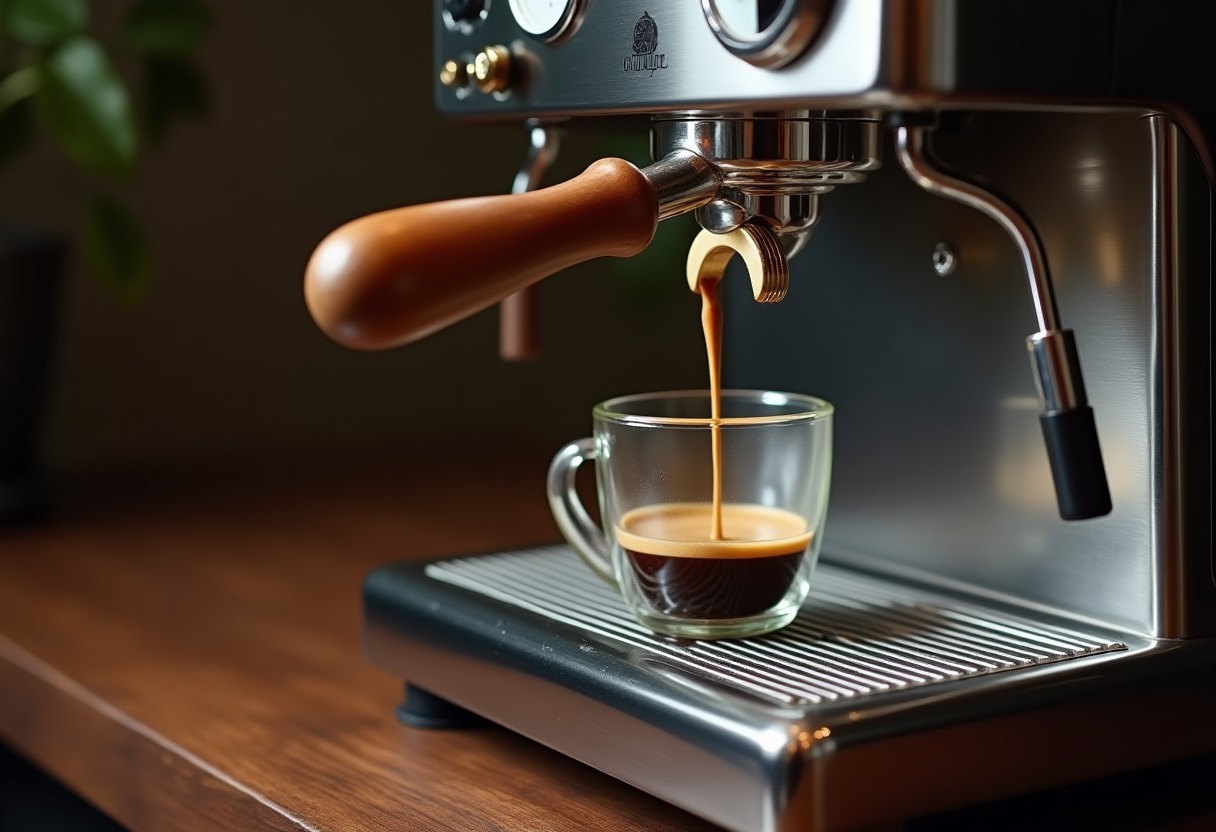
Your espresso tastes flat despite perfect grind settings and timing because you're pulling shots with static pressure. Espresso flow profiling transforms lever machines into precision extraction instruments, letting you control pressure curves throughout the shot for dramatically better flavor clarity and balance.
What Makes Flow Profiling Essential for Manual Espresso
Traditional espresso machines deliver constant 9-bar pressure from start to finish. Manual lever machines with flow profiling capability let you vary pressure throughout extraction, mimicking how coffee naturally wants to be extracted. During pre-infusion, lower pressure (2-4 bars) saturates grounds evenly without channeling. Mid-extraction benefits from peak pressure (9-12 bars) for optimal soluble extraction. The declining pressure finish (6-8 bars) prevents over-extraction of harsh compounds.
Research from the Specialty Coffee Association shows extraction yield varies significantly based on pressure application timing. Beans with different roast levels, origins, and processing methods respond uniquely to pressure changes. Light roasts often benefit from extended pre-infusion at low pressure, while darker roasts extract better with aggressive mid-shot pressure followed by rapid decline.
The physics matter here: pressure drives flow rate, but flow rate determines contact time between water and coffee particles. By controlling pressure, you're actually controlling extraction kinetics—how fast different compounds dissolve into your cup.
Understanding Flow Profiling Components and Techniques
Flow profiling requires three controllable elements: pressure application, timing precision, and flow rate monitoring. Your lever position directly controls brewing pressure through spring compression or manual force. Most profiling-capable machines use either spring-assisted levers (like La Pavoni designs) or direct-lever systems (like Elektra models).
Pre-infusion technique starts with 2-4 bar pressure for 8-12 seconds, achieved by gentle lever engagement until you see first drops. This phase saturates the puck without forcing water through potential weak spots. Visual cues include uniform moisture across the bottomless portafilter surface and steady, slow dripping.
Peak extraction applies maximum pressure (9-12 bars) for 15-20 seconds, generating the golden honey-colored stream we associate with perfect espresso. Your lever should be fully engaged, spring or manual force driving water through the saturated puck. Watch for flow consistency—erratic streams indicate channeling requiring grind or distribution adjustment.
Declining pressure finish gradually reduces force over 8-12 seconds, letting the shot end naturally without harsh over-extraction. This mimics how commercial machines naturally lose pressure as the pump cycles off, but with manual control over timing and rate.
Flow Profile Variations by Coffee Type
Different coffees demand different pressure approaches. Here's how extraction curves should vary:
| Coffee Type | Pre-Infusion | Peak Pressure | Decline Phase | Total Time | |-------------|--------------|---------------|---------------|------------| | Light Roast Single-Origin | 10-15 seconds at 3 bar | 18-22 seconds at 10-11 bar | 10-12 seconds declining | 38-45 seconds | | Medium Roast Blend | 8-10 seconds at 4 bar | 15-18 seconds at 9-10 bar | 8-10 seconds declining | 32-38 seconds | | Dark Roast Espresso | 6-8 seconds at 2-3 bar | 12-15 seconds at 8-9 bar | 6-8 seconds declining | 25-30 seconds | | Natural Process Beans | 12-18 seconds at 2-3 bar | 20-25 seconds at 9-10 bar | 12-15 seconds declining | 45-55 seconds |
Natural process coffees require extended pre-infusion because their irregular density creates channeling risks. The fruit mucilage residue makes these beans more prone to uneven extraction without proper saturation time. Competition baristas often use 18-20 second pre-infusion phases for naturals.
Light roasts need aggressive peak pressure to break through their dense cellular structure. The Maillard reaction development in light roasts creates harder cell walls requiring more force to extract desirable acids and aromatics while avoiding under-extraction sourness.
Recommended Manual Lever Machines for Flow Profiling
Manual lever espresso machines with true profiling capability fall into three categories: spring-assisted levers, direct lever systems, and hybrid manual/electric models.
La Pavoni Professional represents the classic spring-assisted approach. The massive spring provides consistent pressure while allowing profile variation through lever timing. Pre-heat the group head for 20 minutes minimum, and expect a learning curve measuring months, not weeks. Price point around $1,400 makes it accessible for serious home baristas ready to commit to technique development.
Elektra Micro Casa offers direct lever control without spring assistance. Every gram of pressure comes from your arm strength, providing ultimate control but demanding physical consistency. The brass and copper construction takes 45 minutes to reach thermal stability. Budget $2,800-3,200 for the complete setup.
Pressure gauge espresso machines like the Flair Pro series bridge manual control with pressure monitoring. The built-in gauge lets you see exact pressure application in real-time, crucial for learning proper profiling technique. At $350-500, these represent the most accessible entry point for flow profiling experimentation.
Cafelat Robot provides a unique dual-lever system generating maximum pressure through mechanical advantage rather than spring tension. The all-manual approach means no heating element—you're dependent on water temperature retention in your kettle. Excellent for single-origin light roasts requiring precise pressure control.
Flow control espresso devices like paddle modifications for traditional machines offer profiling capabilities on existing equipment. These retrofit solutions work well for experimenting before committing to a full manual system.
Advanced Flow Profiling Techniques Most Baristas Miss
Temperature profiling alongside pressure profiling multiplies your control variables. Start brewing water at 205°F for light roasts, letting thermal mass drop temperature naturally throughout extraction. This declining temperature curve prevents over-extraction of harsh compounds while maintaining adequate extraction of desirable acids.
Grind size staging involves using slightly coarser grinds with aggressive pressure profiles, or finer grinds with gentle pressure curves. Your Best Coffee Grinders Espresso setup becomes crucial here—stepless adjustment capability lets you fine-tune this relationship.
Espresso extraction scales with 0.1g precision help you monitor real-time extraction yield during profiling. Aim for 1:2 ratios with light roasts, 1:2.5 with medium roasts, adjusting pressure timing to hit target weights within ±2 seconds of your planned extraction time.
Puck preparation becomes more critical with profiling. Distribution tools and 2026 03 28 Best Espresso Tampers that ensure perfectly level surfaces prevent channeling that pressure variations can exploit. A 0.2mm tilt in your puck surface creates preferential flow paths that ruin profiling efforts.
The "blooming shot" technique extends pre-infusion until you see the puck physically expand 2-3mm. This visual cue indicates complete CO2 degassing before peak pressure application. Particularly effective with beans roasted within 4-7 days when CO2 content remains high.
FAQ
What pressure should I start with for espresso flow profiling? Begin with 3-4 bars for pre-infusion, regardless of your coffee type. This pressure saturates grounds without forcing water through weak spots in your puck. Most manual lever machines achieve this pressure with gentle lever engagement—you should see steady, slow dripping without aggressive streams. Hold this pressure for 8-12 seconds before transitioning to peak extraction pressure. Starting higher creates channeling risks that ruin the entire shot.
How do I know if my flow profiling is working correctly? Watch for three visual indicators during extraction: uniform saturation across the puck surface during pre-infusion, consistent honey-colored stream during peak pressure (no spurting or side-channeling), and gradual stream thinning during pressure decline. Taste indicators include balanced acidity without sourness (proper pre-infusion), full body without bitterness (correct peak pressure), and clean finish without astringency (proper decline phase). How To Dial In Espresso covers these sensory markers in detail.
Can I use flow profiling techniques on semi-automatic machines? Most semi-automatic machines deliver constant 9-bar pressure, limiting true flow profiling capability. However, you can simulate basic profiling by controlling shot timing and using pre-infusion features if available. Some machines like the Decent Espresso offer electronic flow profiling, while paddle-modified machines provide manual flow control. For authentic pressure curve control, manual lever machines remain the gold standard. Semi Automatic Vs Super Automatic Espresso explains these machine differences thoroughly.
Why does my espresso taste worse with flow profiling than constant pressure? Flow profiling amplifies both positive and negative aspects of your technique. If your grind consistency, distribution, or tamping isn't dialed in, pressure variations will exploit these weaknesses and create uneven extraction. Start with perfect puck preparation before attempting profiling—use quality grinders, proper distribution tools, and consistent tamping pressure. Also, many home baristas rush the learning curve. Expect 50-100 shots of practice before seeing consistent improvement over standard pressure shots.
How does bean age affect flow profiling requirements? Fresh beans (2-7 days post-roast) contain high CO2 levels requiring longer pre-infusion phases to prevent channeling—extend pre-infusion to 12-18 seconds. Beans aged 8-21 days extract more predictably with standard 8-12 second pre-infusion timing. Beyond 21 days, beans lose volatile compounds and benefit from slightly higher peak pressures (10-11 bars instead of 9) to maintain extraction yield. Best Coffee Subscriptions 2026 helps ensure consistent bean freshness for profiling experimentation.
Flow profiling transforms manual lever machines from nostalgic curiosities into precision extraction tools that reveal flavors impossible with constant-pressure systems.
Some links on this page are affiliate links. We may earn a small commission if you purchase through them, at no extra cost to you.
As an Amazon Associate we earn from qualifying purchases. This article contains affiliate links; if you buy through them we may earn a small commission at no additional cost to you.