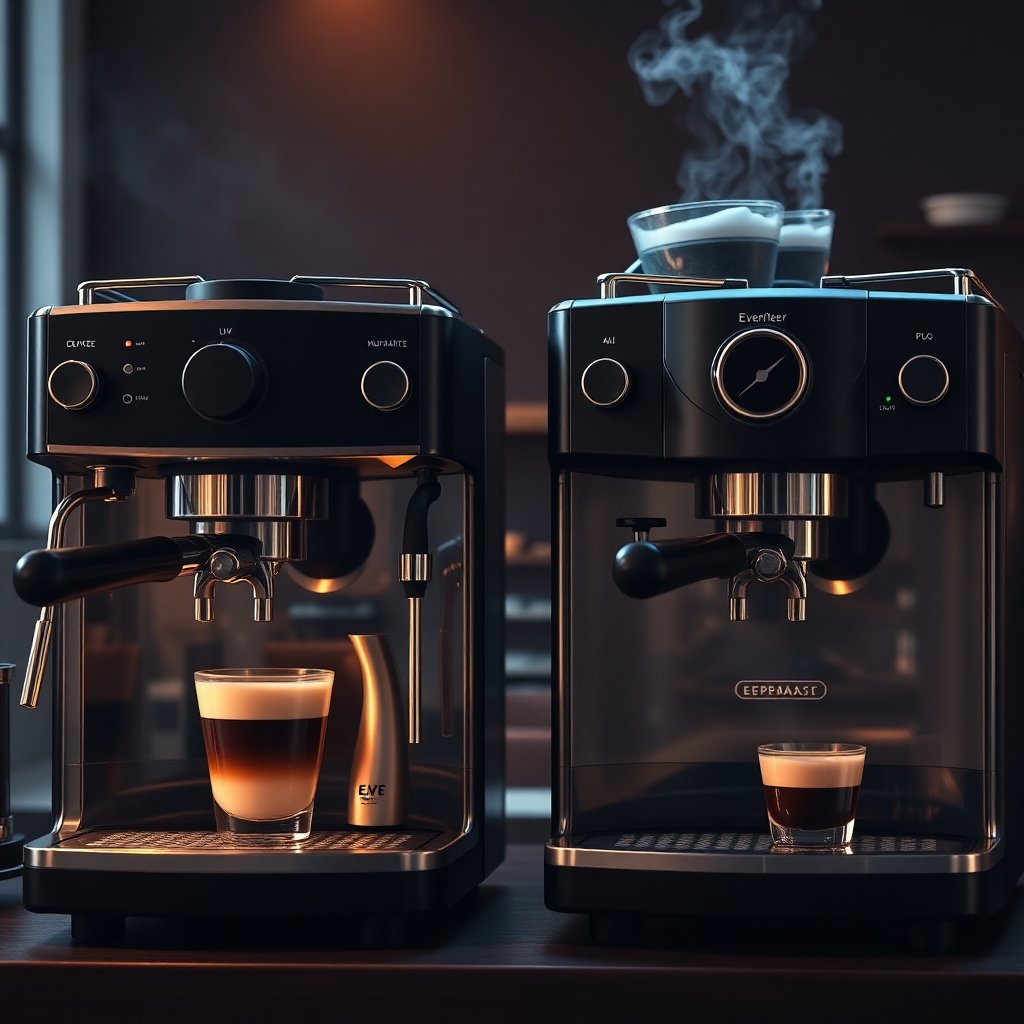
This is the first real decision in home espresso, and most buying guides don't explain it well.
Semi-automatic machines require you to grind, dose, tamp, and start the shot manually. The machine pulls the shot; you control the variables.
Super-automatic machines (also called "fully automatic" or "bean-to-cup") do everything with a button push. Beans go in one end; espresso comes out the other.
Neither is objectively better. They're different tools for different people. Here's the honest breakdown.
Semi-Automatic: Control, Learning Curve, Better Results
Semi-automatics give you control over every variable: grind size, dose weight, tamping pressure, shot time, water temperature. That control is both the appeal and the challenge.
Why People Choose Semi-Auto
Better espresso ceiling: A well-tuned semi-automatic with a good grinder and good technique produces better espresso than any super-automatic at the same price point. The manual process allows for optimization that automated systems can't match.
The hobby aspect: Many home baristas want the ritual. Grinding, dosing, tamping, pulling — it's a 5-10 minute morning process that some people find genuinely enjoyable. If you like the idea of developing a skill, semi-auto is for you.
Upgradeability: You can upgrade your grinder without replacing the machine. You can upgrade the machine without replacing the grinder. The system is modular — each component can be improved independently as your skills and budget grow.
Better steam wands: Semi-automatics at the $400+ range have proper steam wands that produce real microfoam for latte art. Learning to steam milk is a skill, but a rewarding one — the gap between automatic frothers and a proper steam wand is significant.
The Downsides
Learning curve: It takes time to dial in. Your first shots will probably be bad. Many beginners give up within the first month because they can't figure out why their shots taste sour or bitter. Dialing in grind size alone requires patience and some understanding of extraction theory.
More equipment: You need a good grinder, a scale, a tamper, and space for all of it. The total investment is higher than the machine price alone.
More time: A semi-automatic requires engagement every morning. On rushed days, this is a friction point.
Best Semi-Auto Picks
Gaggia Classic Pro — The classic entry point for serious semi-auto learning. Single boiler, commercial-style portafilter, no-nonsense design. Pairs perfectly with a decent grinder. Requires learning but rewards it.
→ Shop Gaggia Classic Pro on Amazon
Breville Barista Express — Built-in grinder lowers the barrier to entry considerably. One machine, one footprint. The grinder isn't cafe-quality, but it's more than adequate for learning. The best choice if you want to start semi-auto without buying a separate grinder.
→ Shop Breville Barista Express on Amazon
Breville Barista Pro — The step up from the Express, with a faster heat-up time and more precise temperature control. If you're willing to spend $700+, this is the machine to beat in the prosumer entry segment.
→ Shop Breville Barista Pro on Amazon
Super-Automatic: Convenience, Consistency, Lower Ceiling
Super-automatics take the skill out of espresso. They grind, dose, tamp, brew, and sometimes even froth milk — all automatically.
Why People Choose Super-Auto
Zero learning curve: Push a button; get espresso. Every time. Consistent results from day one without any technique development. The machine handles grind adjustment, dose, and brew time internally.
Speed: A super-automatic produces a drink in 60-90 seconds from bean to cup. Faster than any semi-automatic workflow.
Convenience for multiple users: Households where different people want different drinks — some want espresso, some want long coffee, some want cappuccino — benefit from the flexibility of a super-auto. Anyone can use it immediately.
Low maintenance mindset: Super-automatics handle their own cleaning cycles. Descaling prompts appear when due. Less to think about on a daily basis.
The Downsides
Lower quality ceiling: The best espresso you can get from a super-automatic is good. It's not great. The automated grind-dose-tamp process introduces compromises that even high-end super-automatics can't fully overcome.
Worse milk texturing: Automatic milk systems (cappuccinators, panarello wands) produce coarser foam than a steam wand. Good enough for most drinks; not enough for tight microfoam or latte art.
Expensive repairs: When a super-automatic breaks — and they all eventually do — the repair cost is often high. The integrated systems are more complex to service than semi-autos. A $1,000 super-auto repair bill is not unusual.
Can't separate components: When the grinder wears out, you replace the whole machine.
Best Super-Auto Picks
DeLonghi Magnifica Evo — The updated Magnifica line is the most popular entry-level super-automatic for good reason. Reliable results, easy maintenance, solid build. The best starting point for super-auto.
→ Shop DeLonghi Magnifica Evo on Amazon
Jura E8 — Premium option with an excellent LatteBarrel milk system, one-touch milk drinks, and genuinely impressive build quality. The go-to recommendation when quality and convenience are both priorities and budget isn't the constraint.
Philips 3200 LatteGo — Strong mid-range option with a unique easy-clean milk system. The LatteGo frother disassembles in seconds for rinsing — one of the most practical milk system designs in this category.
→ Shop Philips 3200 LatteGo on Amazon
Head-to-Head Comparison Table
| | Semi-Automatic | Super-Automatic | |---|---|---| | Espresso quality ceiling | Very high | Good | | Learning curve | 2–6 weeks to dial in | None | | Daily time commitment | 5–10 min | 60–90 sec | | Equipment needed | Machine + grinder + tools | Machine only | | Total entry cost | $500–$1,000+ | $400–$1,500 | | Milk texturing | Excellent (steam wand) | Good (auto frother) | | Latte art capable | Yes (with practice) | No | | Repair complexity | Lower | Higher | | Upgrade path | Modular | Replace full unit | | Best for | Coffee enthusiasts | Convenience-first households |
Who Should Buy Which
Buy a semi-automatic if:
- You want to learn and improve your espresso technique
- You care about the ceiling of quality your machine can produce
- You have 10-15 minutes in the morning and enjoy the ritual
- You want to develop milk steaming skills and make latte art
- You're the only espresso drinker in the household
Buy a super-automatic if:
- You want excellent espresso without any technique or learning
- Multiple people in your household will use the machine
- Consistency and convenience matter more than peak quality
- You'd rather pay more upfront than invest time in learning
- You frequently want milk-based drinks without steaming effort
The Grinder Question
If you go semi-automatic, your grinder matters as much as the machine. A bad grinder makes a good machine pull bad shots. Budget roughly 40-60% of your total equipment cost toward a grinder.
Good entry grinders for semi-auto:
- Baratza Encore ESP — purpose-built for espresso, consistent grind, good for beginners
→ Shop Baratza Encore ESP on Amazon
- Breville Smart Grinder Pro — more adjustment range, good step-up option
- 1Zpresso J-Max — manual grinder, extremely precise, no motor to maintain
If budget is a concern, the Breville Barista Express (with built-in grinder) lets you start learning without buying a separate grinder first. The built-in grinder is adequate; you can always upgrade later.
FAQ
What's the minimum budget for a good semi-automatic setup? Budget $400–$600 for a machine (Gaggia Classic Pro or Breville Infuser) and $150–$200 for a starter grinder. That's $550–$800 all-in for a setup that will last years and produce genuinely excellent espresso once you've dialed it in.
Are super-automatics actually easier to maintain? They run automatic cleaning cycles, which is convenient. But when something breaks — and the more moving parts, the more eventual failure points — repairs are more expensive and more complex than semi-auto servicing. Long-term, semi-automatics are often easier and cheaper to maintain.
Can I make lattes and cappuccinos with both types? Yes. Semi-automatics use a steam wand you operate manually — with practice, you can texture milk for any espresso drink. Super-automatics use automatic frothers that produce decent foam for cappuccinos and lattes, though not as smooth as manual microfoam.
How long does it take to get good at semi-auto espresso? Most people pull acceptable shots within 2 weeks and genuinely dialed-in shots within 4–6 weeks. The variables to learn: grind size, dose, tamp pressure, shot time. One variable at a time. There's a good reason for the learning curve — you're learning a craft, not just operating a machine.
What's the best super-automatic under $600? The DeLonghi Magnifica Evo sits around $500–$550 and represents the best value in the category. Reliable, easy to use, good results, minimal learning required. For a first super-auto, it's hard to beat.
The Honest Take
Most people who genuinely enjoy coffee drift toward semi-automatics eventually — because the ceiling is higher and the craft aspect is satisfying. But "eventually" is doing a lot of work in that sentence.
If you're not sure, start with a super-automatic. You can always upgrade to a semi-auto when you want more control. Buying a semi-auto first when you're not ready for the learning curve is how people end up with unused machines on the counter.
The best espresso machine is the one you'll actually use every morning. If that's a button-push machine, there's no shame in it — a good super-auto beats expensive cafe coffee every time.
For your next step, see our guide to the best espresso machines for home use for ranked options across both categories, or how to dial in espresso if you're already committed to the semi-auto path.
As an Amazon Associate we earn from qualifying purchases. This article contains affiliate links; if you buy through them we may earn a small commission at no additional cost to you.